Category: Uncategorized

  • Baptism Is Not a Ritual

    Baptism Is Not a Ritual

    Scripture: Romans 6:3-4, Matthew 28:19

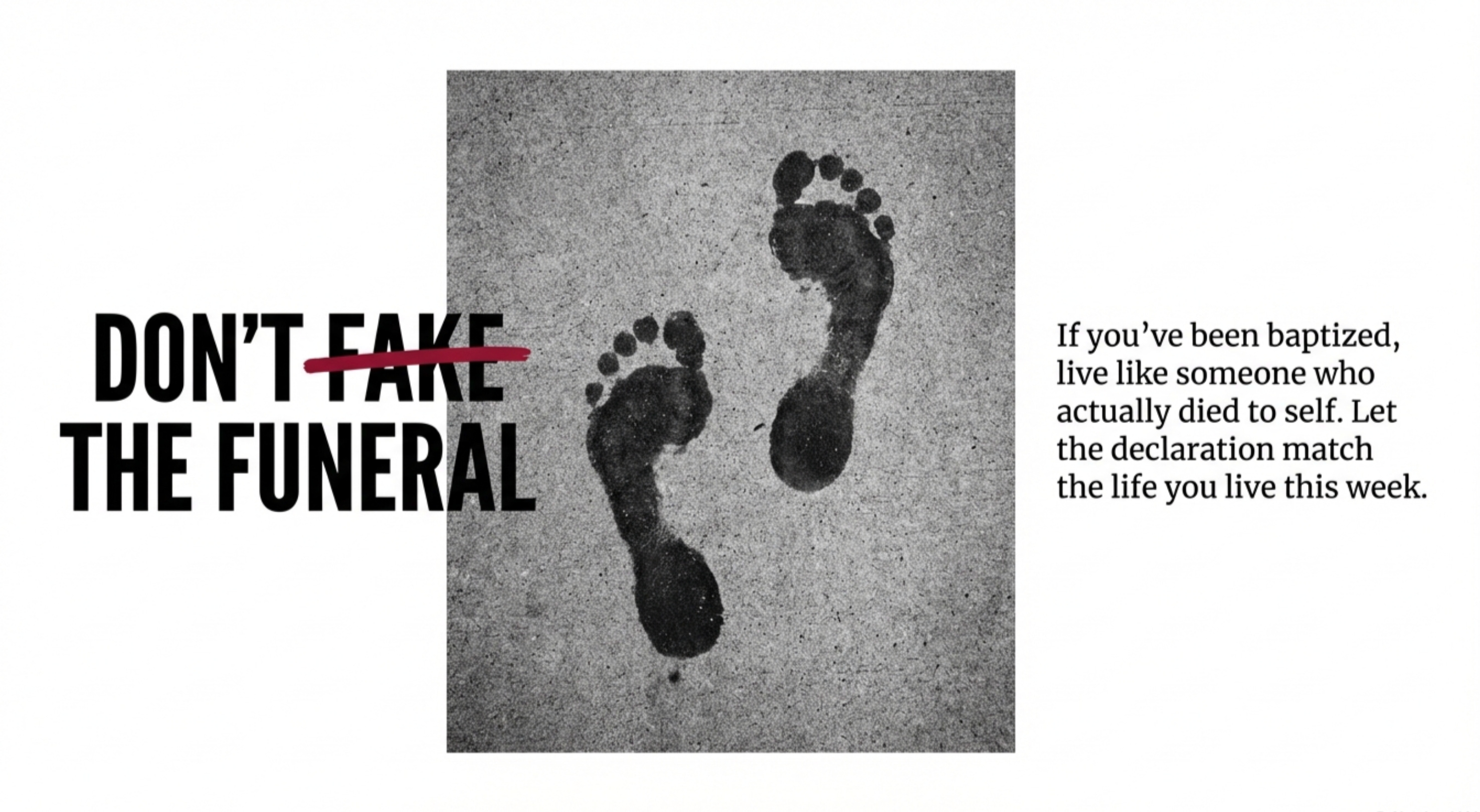
    Baptism isn’t magic. It won’t protect you. It won’t fix you if your heart hasn’t actually changed. Here’s the hard truth: you can’t bury someone who isn’t dead.

    Think about what baptism actually means. You go into that water to symbolize that the old version of you—the one who lived for yourself, who chased what felt good, who did whatever you wanted—that person has died. You’ve chosen to let that go. Coming up out of the water means you’re resurrected as someone new, someone whose life now belongs to Jesus.

    But if you haven’t actually made that choice? If you’re just going through the motions because your parents want you to, or because it’s what good Christians do, or because it’s tradition? Then you’re not being baptized. You’re performing a ritual. And rituals without reality are empty.

    This is why baptism matters so much in Scripture. It’s the physical act that declares something spiritual has happened. You’ve died to your own will. You’ve chosen submission to Jesus as Lord. Without that death, baptism becomes meaningless theater. The water can’t do what only a decision can do.

    Think about it: If baptism truly represents dying to yourself and living for Christ, what would that look like in your actual life this week?

    Prayer: God, help me see baptism not as tradition but as a declaration. If I’ve been baptized, let me live like someone who actually died to myself. If I haven’t, give me clarity about whether I’m ready to truly surrender.

  • The Cost of Following Jesus Must Be Clear

    The Cost of Following Jesus Must Be Clear

    Scripture: Matthew 28:19-20, Luke 14:25-33

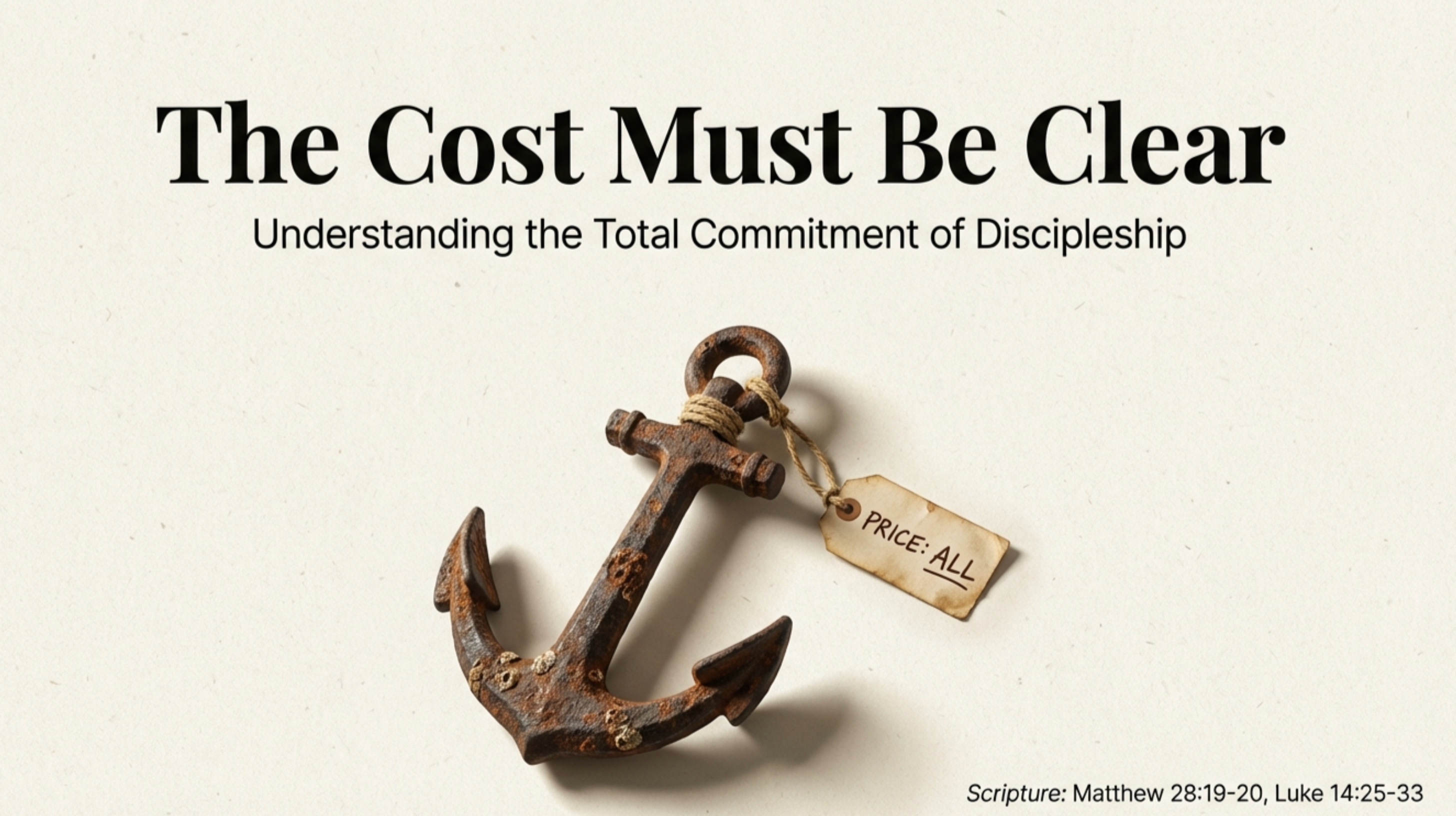
    Here’s something important: when you invite someone to follow Jesus, you’re not just offering them a ticket to heaven. You’re asking them to hand over control of their entire life. Think about it like this—when a woman gets married, she doesn’t just visit her husband once a week and keep living her own life. Marriage is total commitment. Following Jesus works the same way.

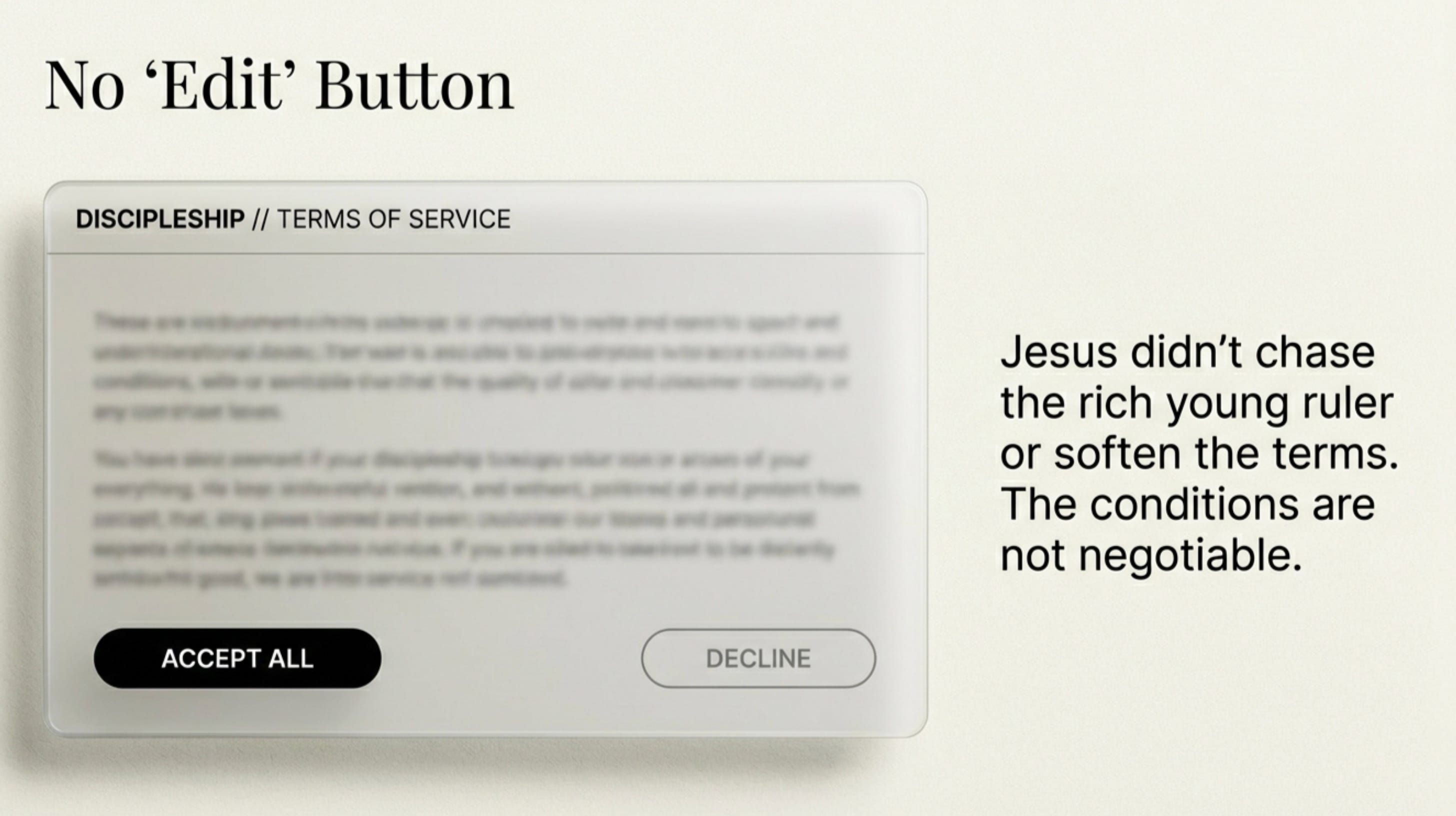
    Too many people hear the Gospel and think it’s just about forgiveness. Sin forgiven? Great. Now you’re good to go. But Jesus never presented it that way. He told the rich young ruler to give up everything, and when the man walked away, Jesus didn’t chase after him or soften the terms. He let him go. The conditions weren’t negotiable.

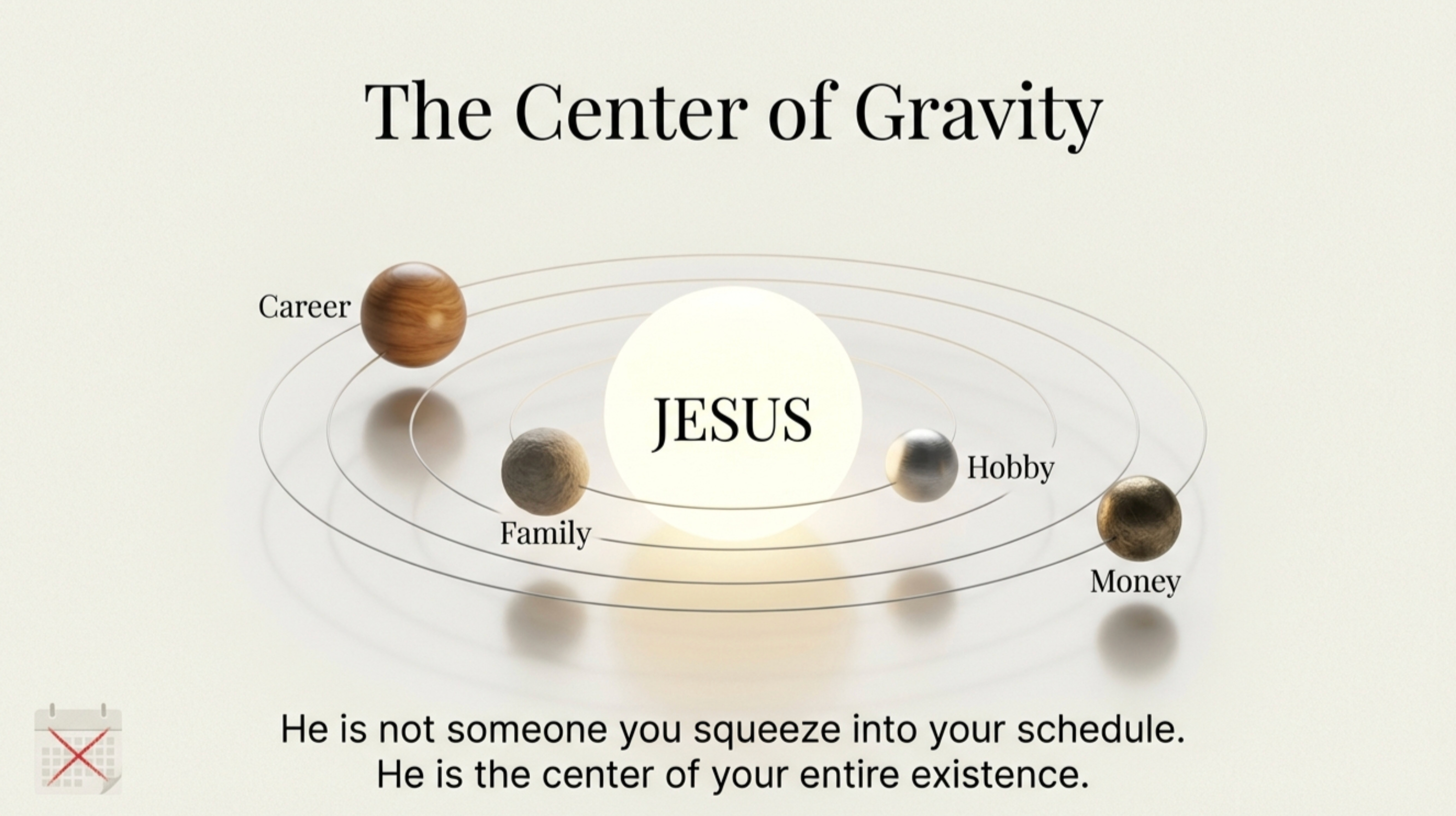
    Before baptism happens, people need to understand what they’re actually signing up for. They need to hear: “You’re not just getting eternal life. You’re making Jesus Lord—not someone you squeeze into your schedule, but the center of your entire existence.” This clarity matters. It separates people who genuinely want to follow from those who just want benefits.

    In places where following Jesus costs something—persecution, family rejection, loss—people understand the stakes immediately. But in comfortable places, it’s easy to baptize someone who’s just after heaven insurance. Don’t do that. Make the claims of discipleship crystal clear first.

    Think about it: If someone asked you today what it means to follow Jesus, would your answer include the word “everything”?

    Prayer: Lord, help me understand that following you isn’t a side thing—it’s the whole thing. Give me clarity about what that costs and courage to live it out completely.

  • Possessions That Possess You

    Possessions That Possess You

    Scripture: Luke 14:33, Mark 10:17-22, Luke 19:1-10

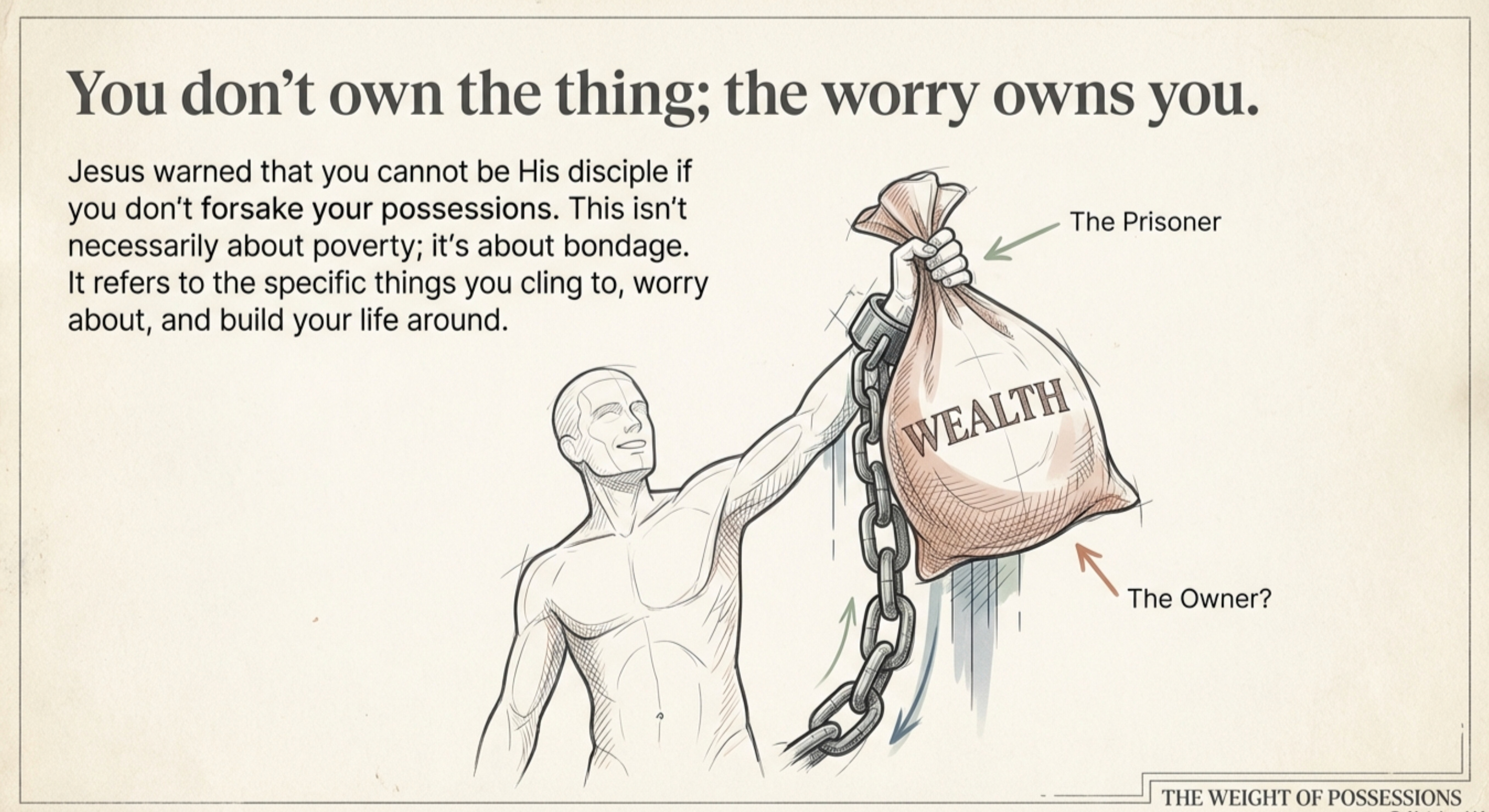
    When Jesus said you cannot be His disciple if you don’t forsake all your possessions, He wasn’t saying everyone has to live in a cave with nothing. He was pointing to something more subtle and more dangerous: the things that possess you.

    Your possessions aren’t necessarily the things you own. Your possession is what owns you. It’s that thing you cling to, worry about, build your life around, can’t imagine losing. For one person it might be a house they’ve mortgaged their peace for. For another it’s a bank account they check constantly. For another it’s investments, property, a car, jewelry, status—anything valuable that you hold so tightly that it holds you.

    Notice how Jesus didn’t give the same instruction to everyone. He told the rich young ruler to sell everything because his love of money had metastasized into his whole life—it was stage-four cancer. But He didn’t tell Zacchaeus to give up everything. Zacchaeus was willing to give half his goods to the poor, and Jesus said that was enough. The instruction was tailored to the person’s condition, but the principle was the same: whatever has a grip on you must be released.

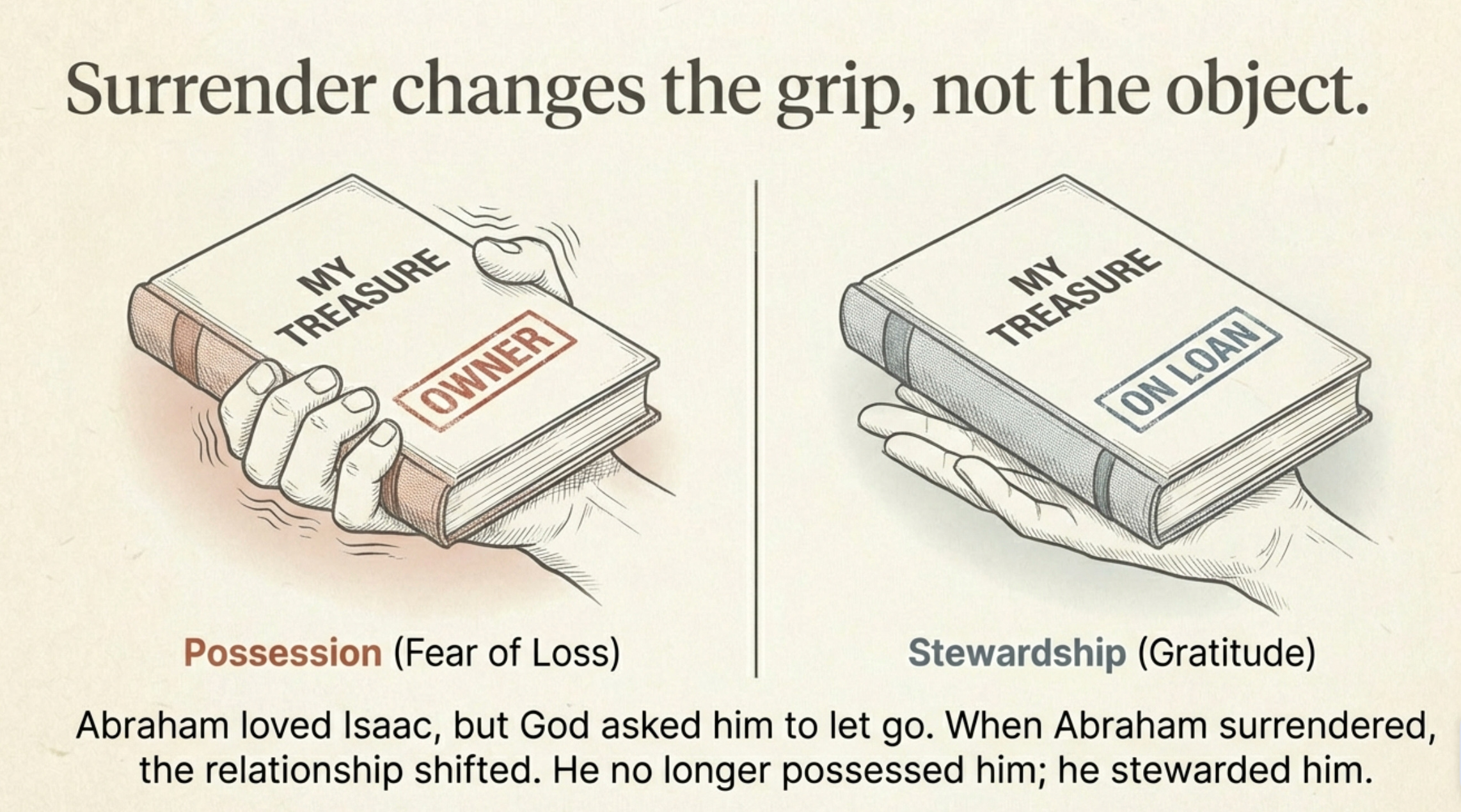
    Here’s the beautiful picture: think of Abraham and Isaac. Abraham loved his son more than anything. Isaac was his treasure, his legacy, his joy. And God asked him to let go—not permanently, but to show Him that he didn’t possess Isaac. The moment Abraham was willing to surrender Isaac, he got him back. But now he held him differently. Isaac was still his son. He was still in his home. But Abraham no longer possessed him. That’s the shift Jesus wants you to make with everything you value.

    The question isn’t “Do I own things?” The question is “Do things own me?” Can you hold your possessions loosely enough that you could lose them and your faith wouldn’t shake? Can you obey God even if it costs you your security, your comfort, your dream?

    Think about it: What is the one thing you own that, if God asked you to surrender it, would be the hardest to let go? That’s probably your possession.

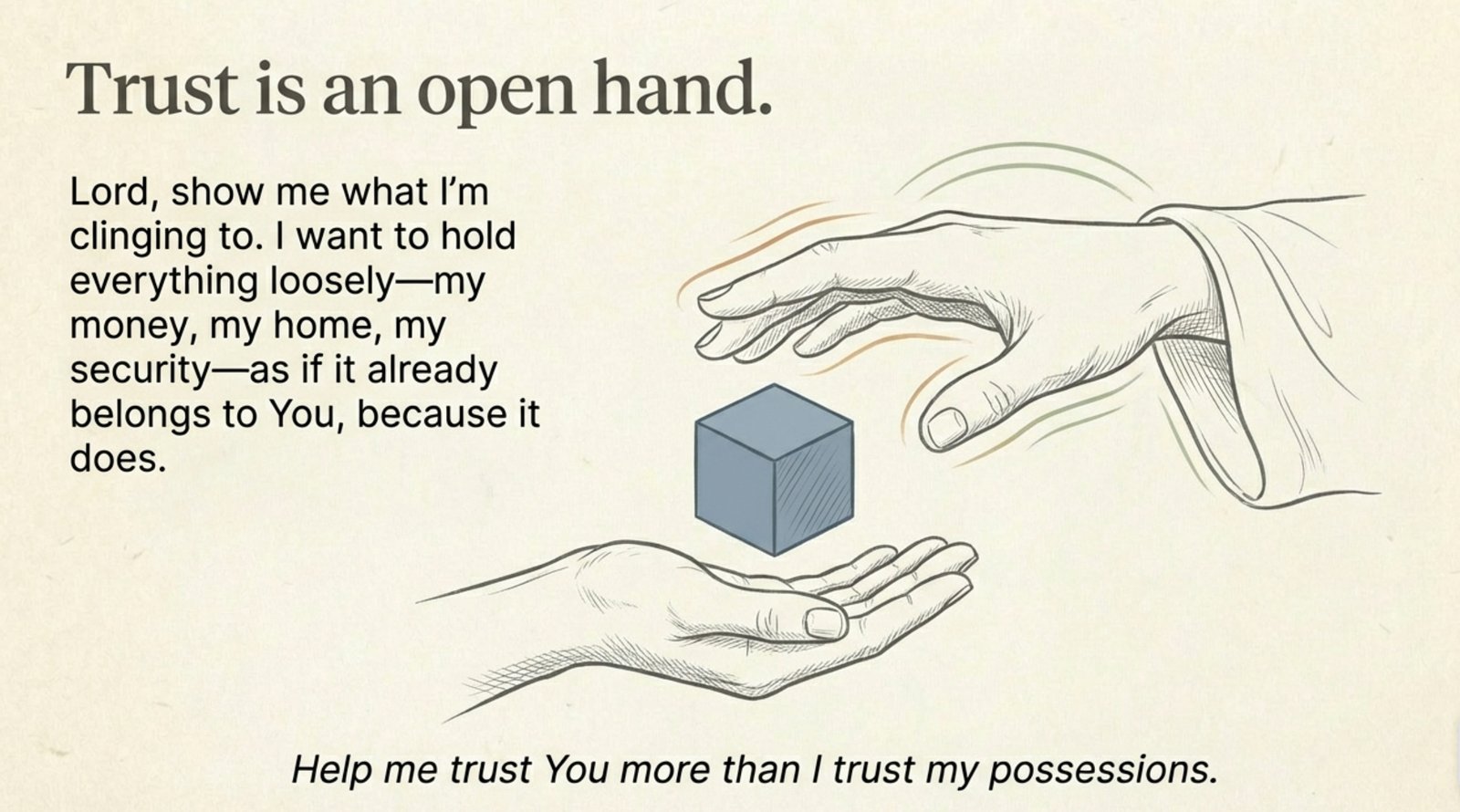
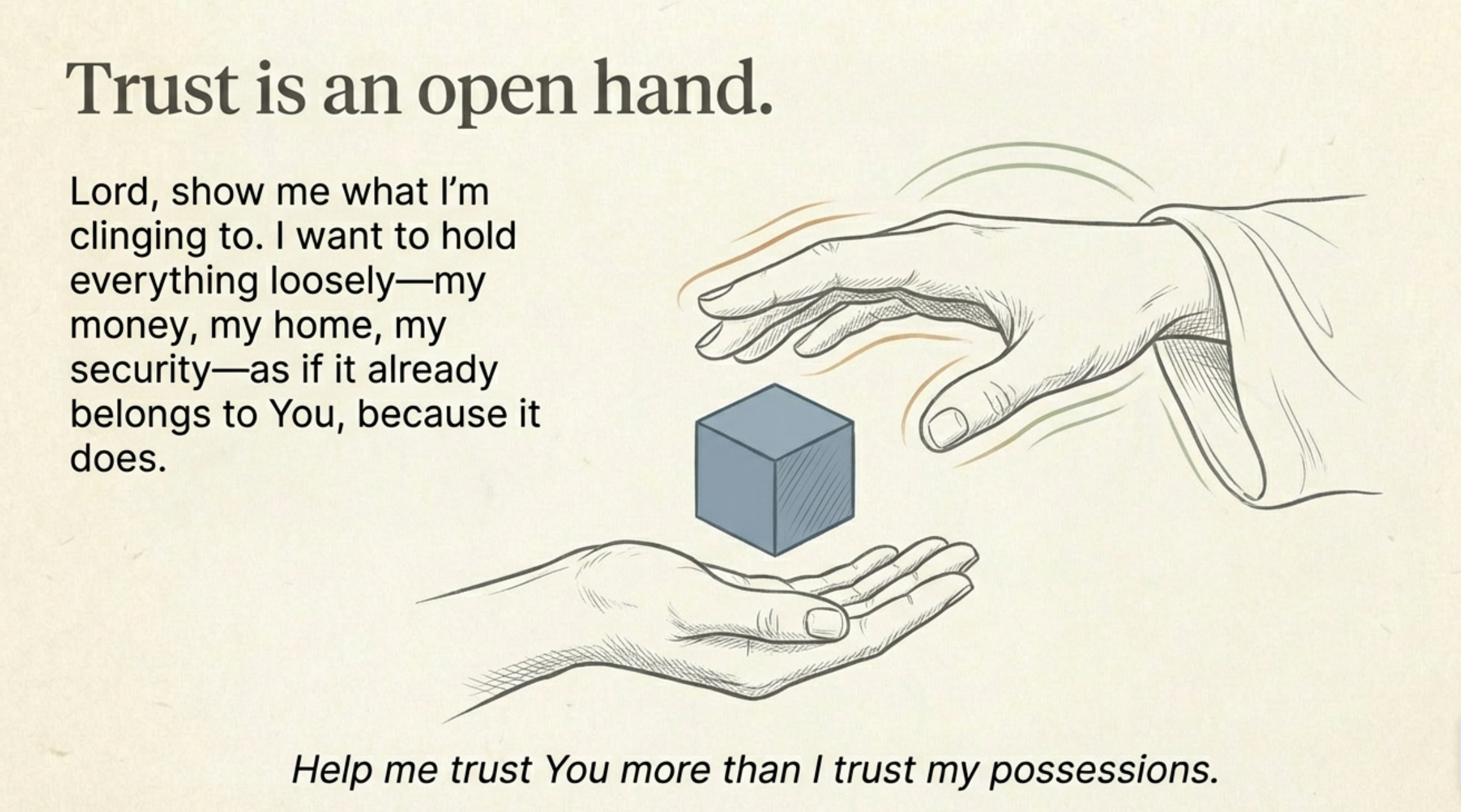
    Prayer: Lord, show me what I’m clinging to. Show me what owns me instead of me owning it. I want to hold everything loosely—my money, my home, my security—holding it all as if it already belongs to You, because it does. Help me trust You more than I trust my possessions.

  • Taking Up Your Cross Daily

    Taking Up Your Cross Daily

    Scripture: Luke 14:27, Luke 9:23

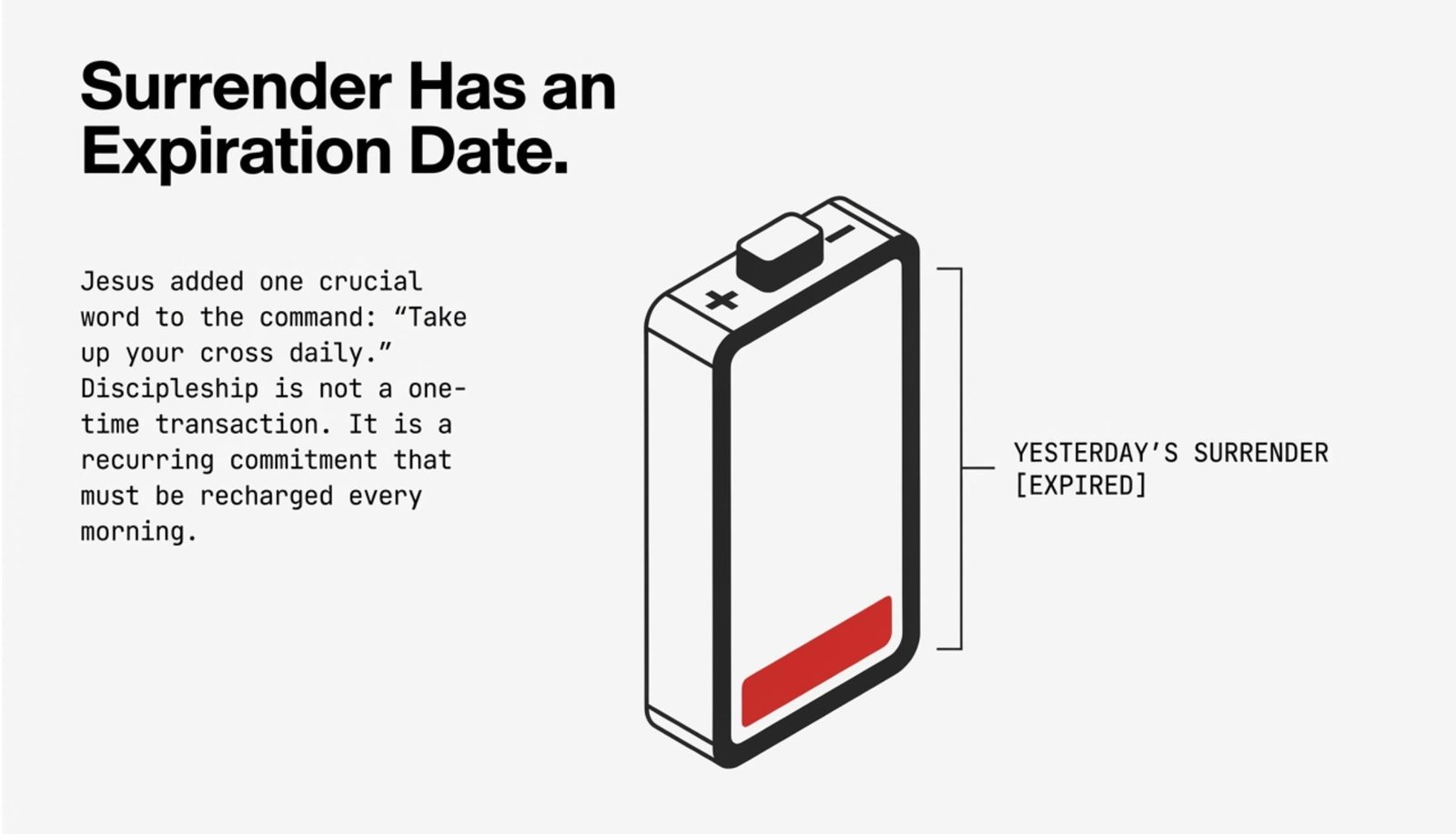
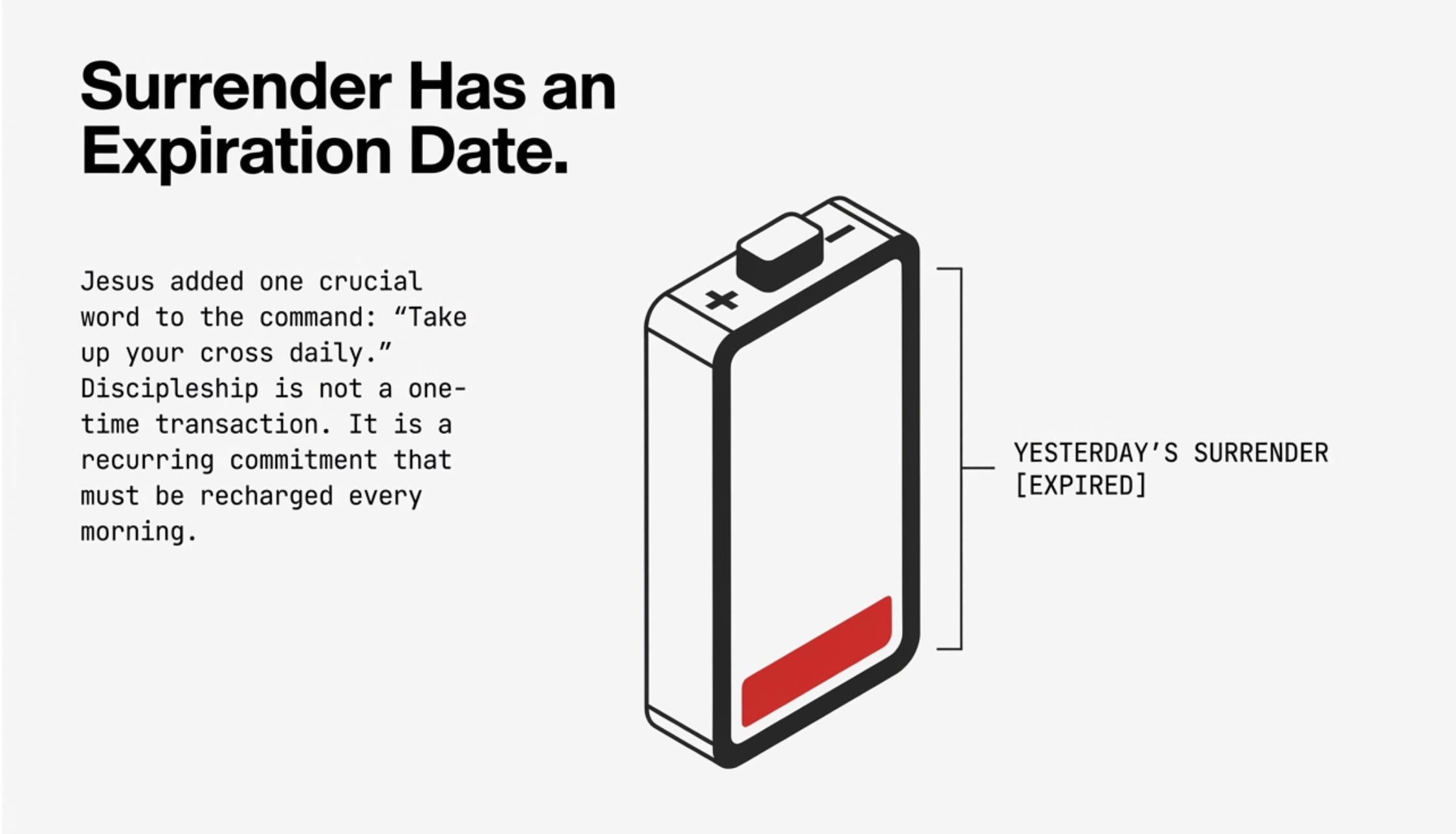
    Here’s what most people miss about taking up your cross: it’s not something you do once. It’s something you do every day. Jesus didn’t say “take up your cross.” He said “take up your cross daily.” That word changes everything.

    In Jesus’s time, the cross wasn’t a religious symbol. It was an instrument of execution. It represented death. When Jesus told His followers to take up a cross daily, He was saying: “Something in you needs to die every single day if you want to follow Me.” That something is your self-will—your desire to do what pleases you, what feels comfortable, what you want.

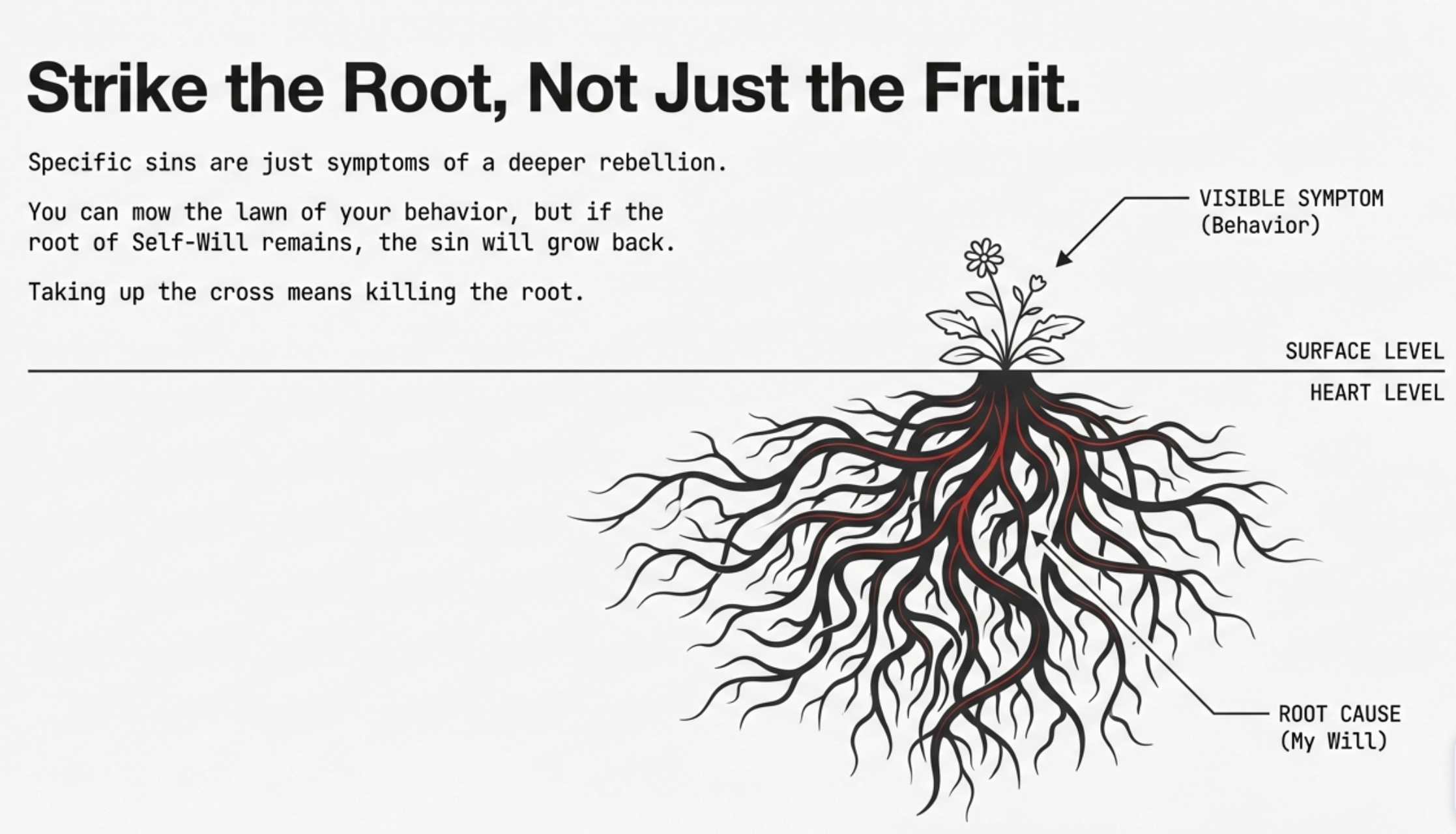
    Think about the root of all sin. It’s not theft or pride or lust in isolation. It’s the deeper issue: I want to do my will instead of God’s will. That’s the cancer. Every sin flows from that fundamental rebellion. Your self-will is the cross you carry. And you have to put it to death daily.

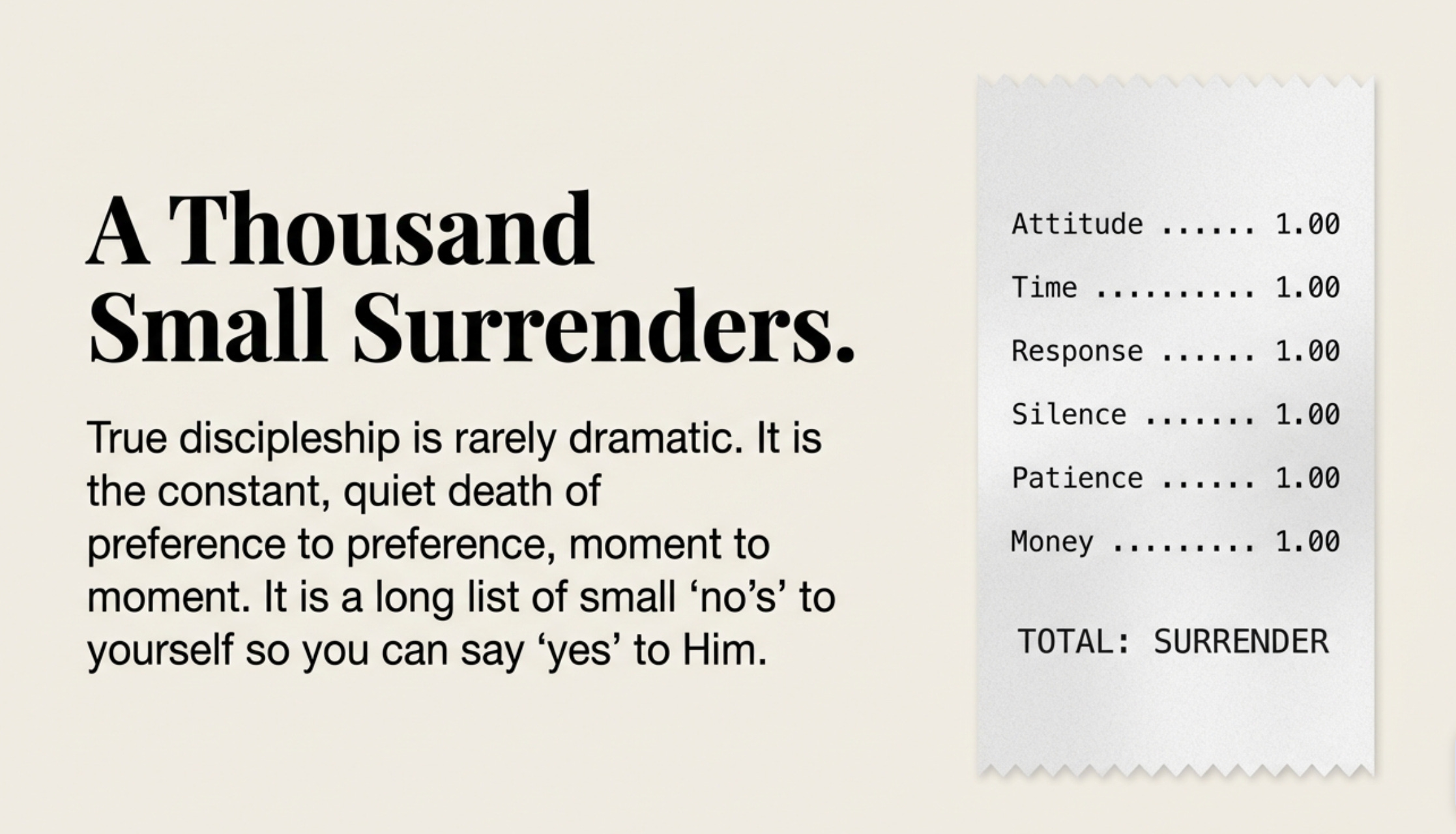
    What does that look like practically? It means your attitude each day is: “Lord, today I’m not going to marry who I want—I’m going to seek Your will. I’m not going to take the job I want—I’m going to obey You. I’m not going to react the way my flesh wants to react—I’m going to respond the way You want me to respond. I’m not going to live where I want or spend money how I want or spend time how I want. Not my will, but Yours.” That’s the daily cross. It’s not dramatic. It’s constant. It’s the death of preference to preference, decision to decision, moment to moment.

    This is why true discipleship is rare. It demands something every single day. It’s not a one-time surrender. It’s a thousand small surrenders.

    Think about it: In the last 24 hours, how many times did you consciously surrender your will to God’s will? How many times did you hold onto your own preference?

    Prayer: Lord, teach me what it means to die to myself daily. I don’t want to just believe in You—I want to follow You. I’m ready to surrender my will, but I need Your strength to do it consistently. Help me see where I’m still holding tight to my own desires.

  • The Supreme Love That Changes Everything

    The Supreme Love That Changes Everything

    Scripture: Luke 14:26-27, Matthew 10:37

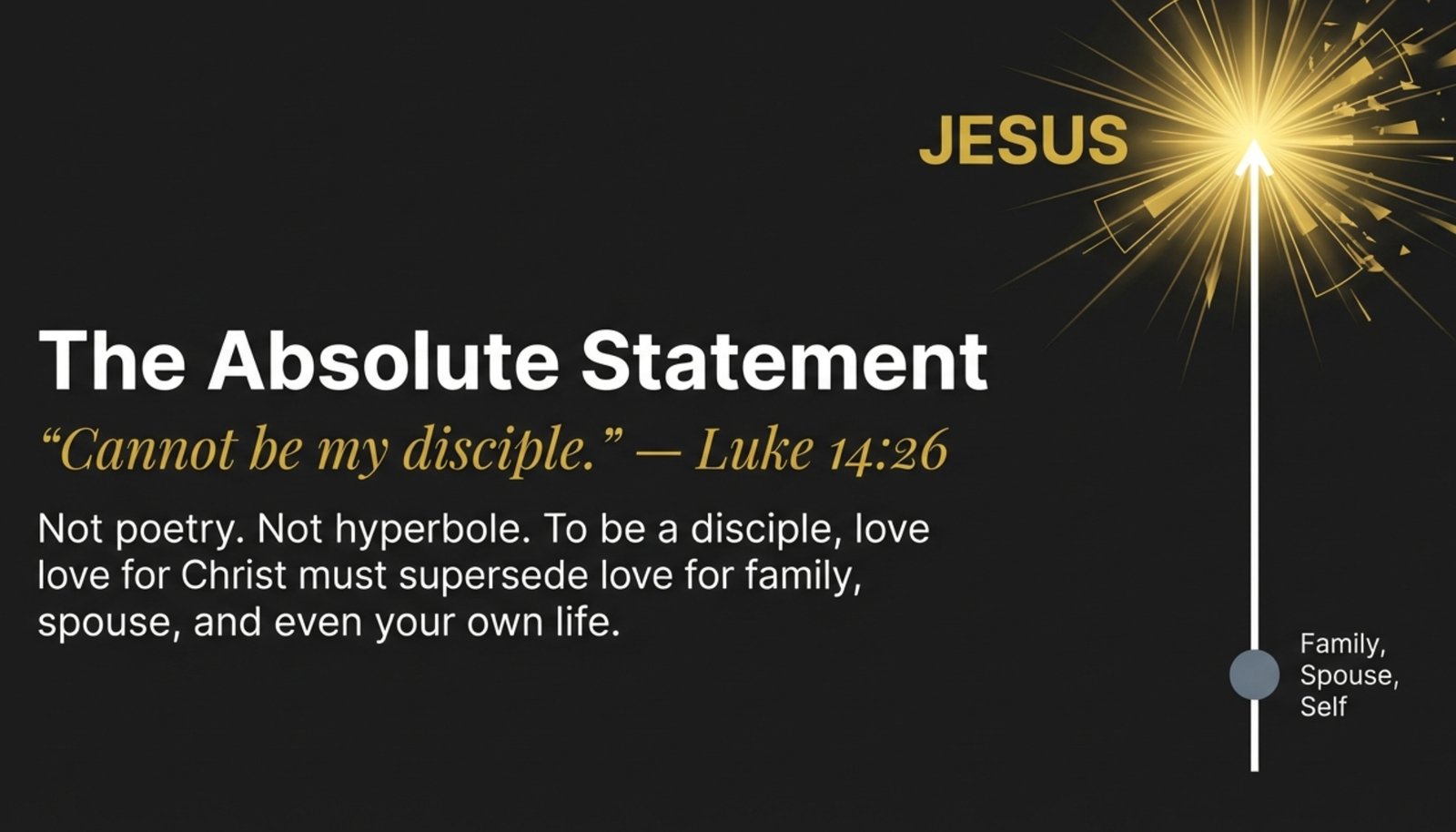
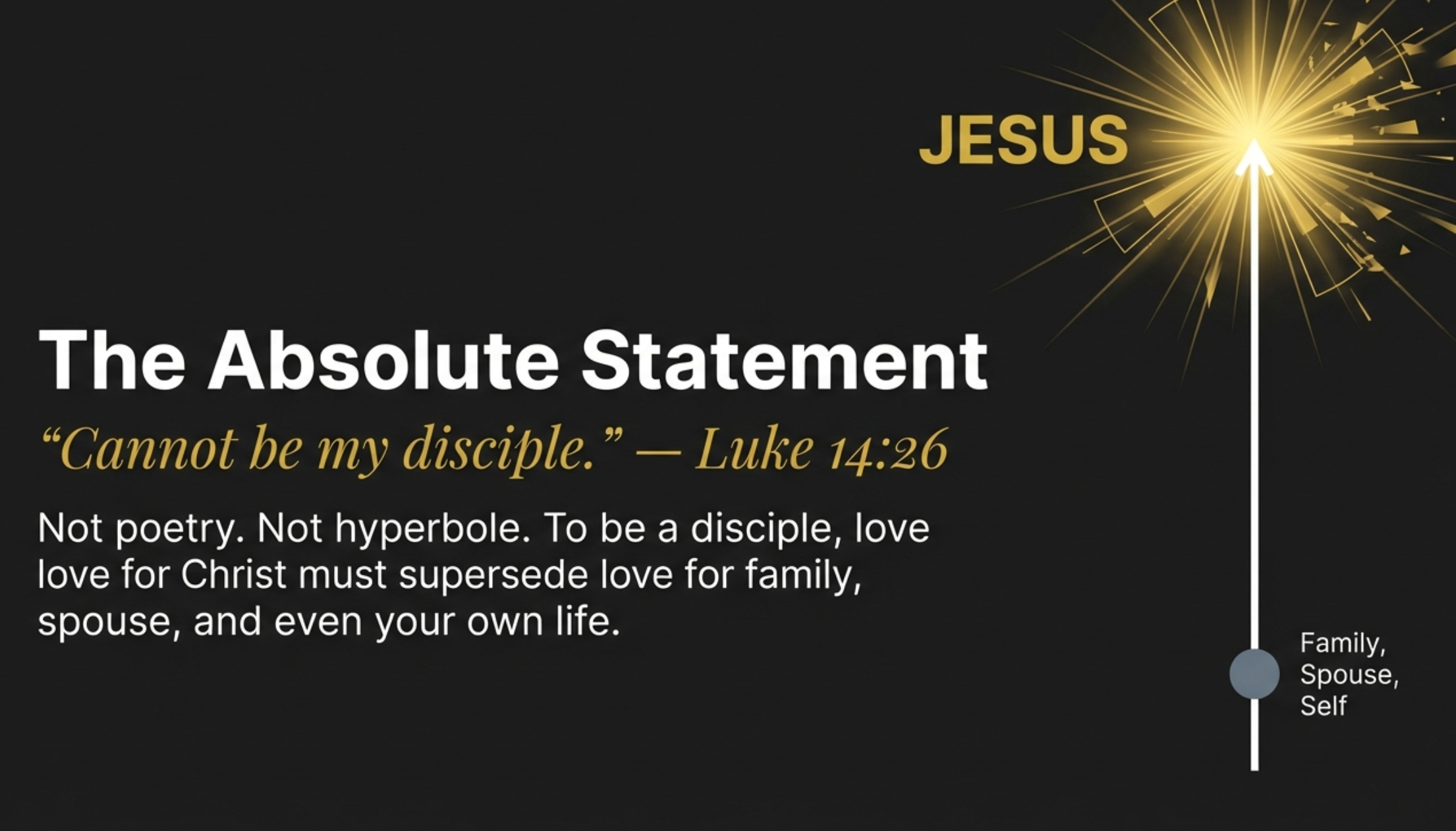
    Here’s a hard truth: Jesus said you cannot be His disciple unless you love Him more than your family, your spouse, your children, and even your own life. That’s not hyperbole or poetry. It’s an absolute statement. “Cannot be my disciple” are His exact words.

    Now, this doesn’t mean you hate your parents or your spouse. Jesus taught us to honor our parents and love our spouses. So what does He mean? It’s about comparison and priority. Imagine your love for your family is like starlight—real and present. But your love for Christ should be like the sun. When the sun rises, the stars don’t disappear, but they become invisible in comparison. That’s the relationship we’re talking about.

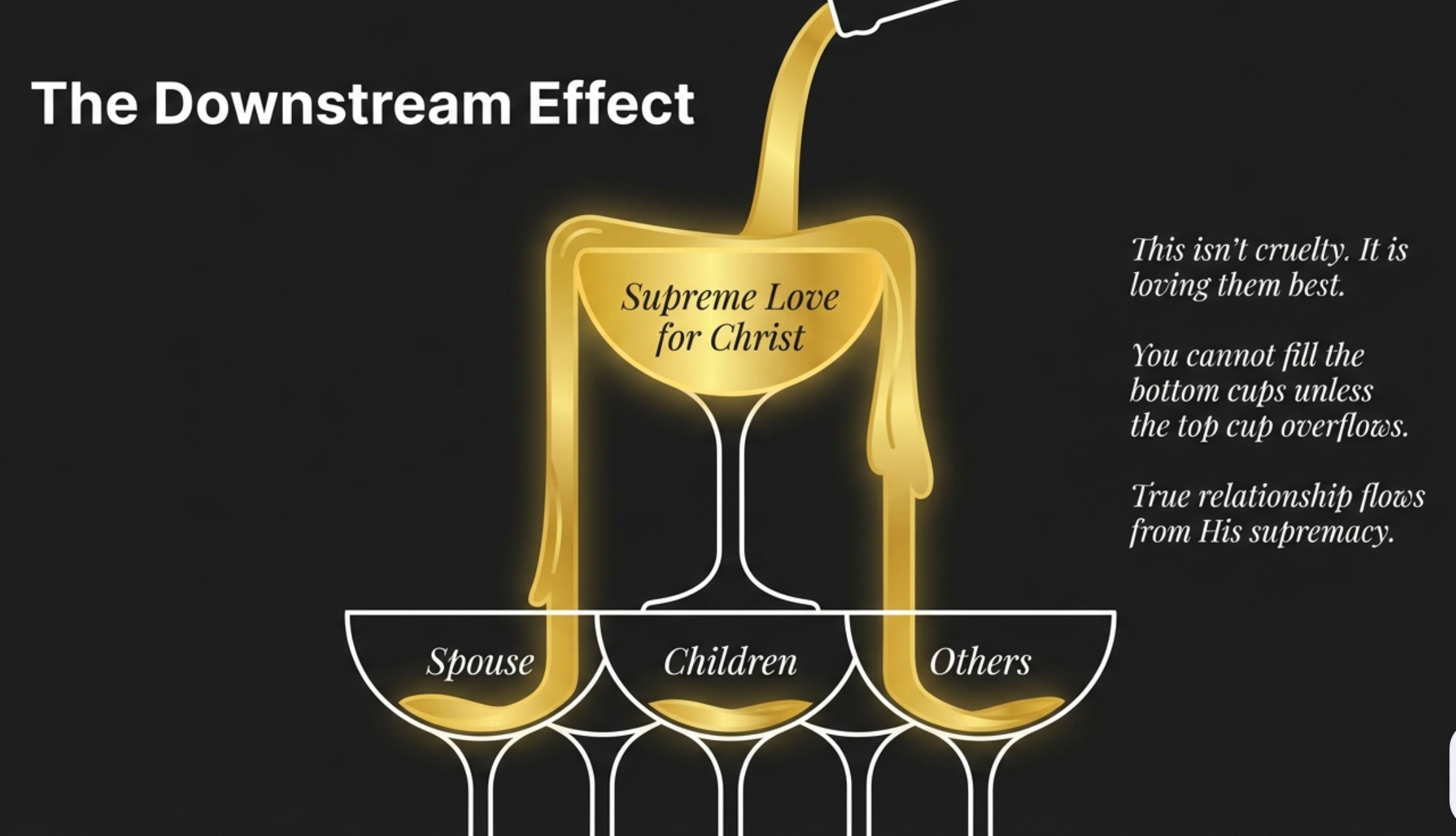
    The practical implication is this: your allegiance to Jesus supersedes every other relationship. When God calls you to do something and your family opposes it, you follow God. When your spouse wants something that contradicts God’s will, you choose God’s will. When your children need something but God is asking you to trust Him with something different, you trust God. This isn’t cruelty to your loved ones—it’s actually loving them best, because you’re putting the ultimate priority where it belongs.

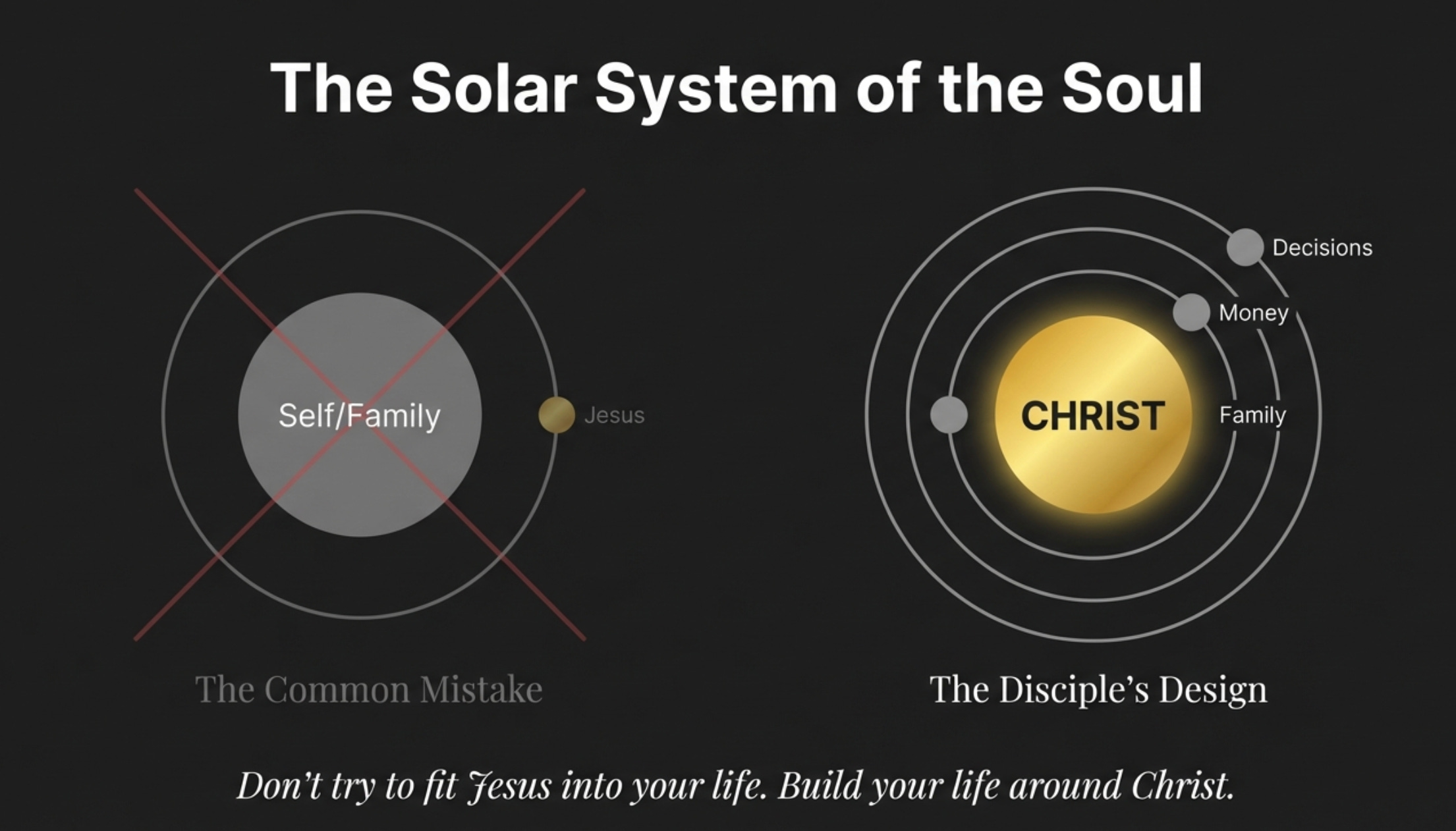
    Think about how this reshapes everything. Most people build their lives around family, career, security, comfort. Then they try to fit Jesus in somewhere. A disciple does the opposite: they build everything around Christ and let their relationships and responsibilities flow from that. That single shift—making Christ supreme—changes how you make decisions, how you spend money, how you spend time, what you’re willing to risk, and what you’re willing to lose.

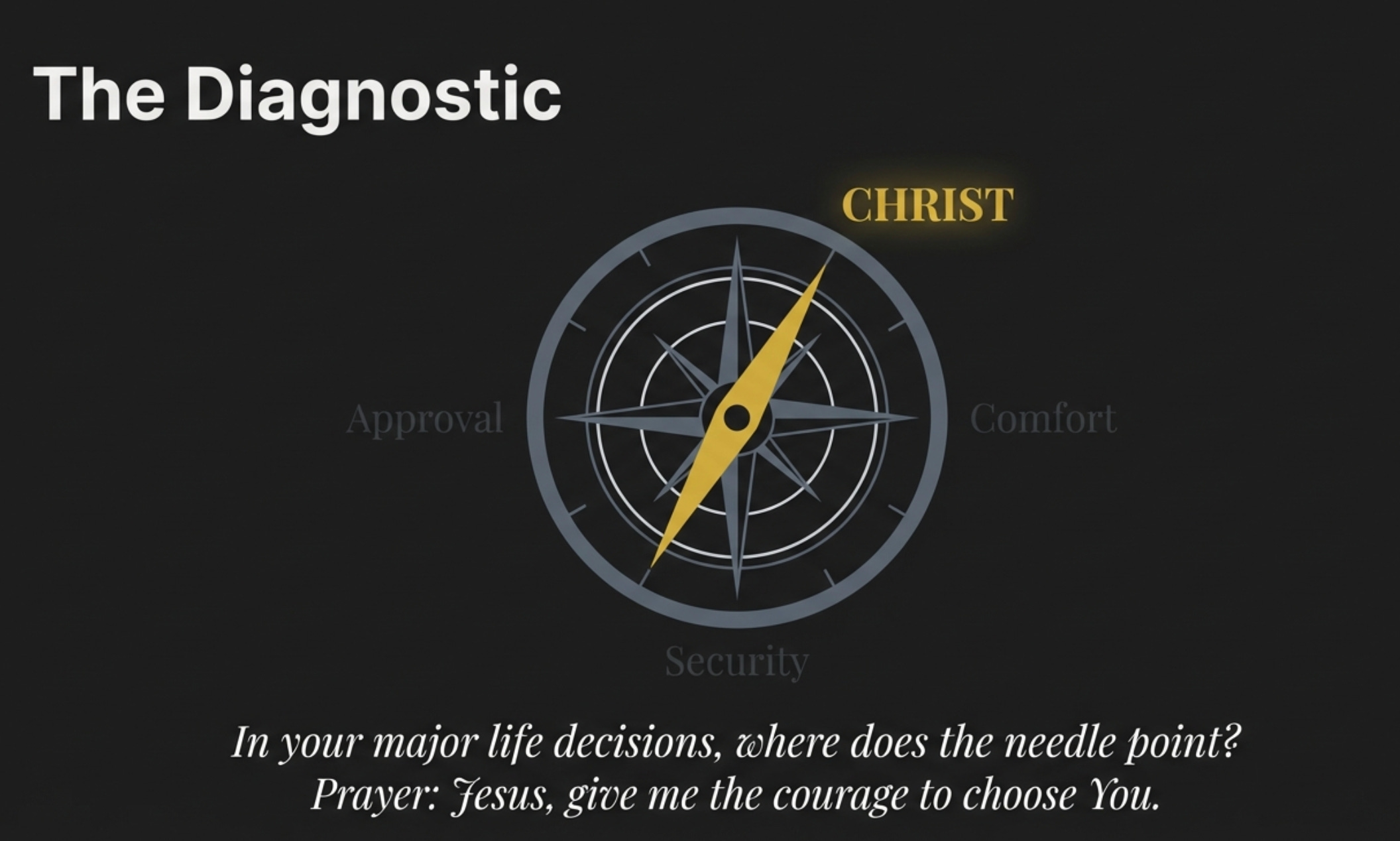
    Think about it: In your major life decisions, is Christ your supreme love, or is something else driving your choices?

    Prayer: Jesus, I want You to be supreme in my life. Help me see where I’ve allowed other loves to compete with my devotion to You. Give me the courage to choose You, even when it costs me something I value.

  • The Difference Between Believers and Disciples

    The Difference Between Believers and Disciples

    Scripture: Mark 16:15, Matthew 28:19-20, Luke 14:25-27

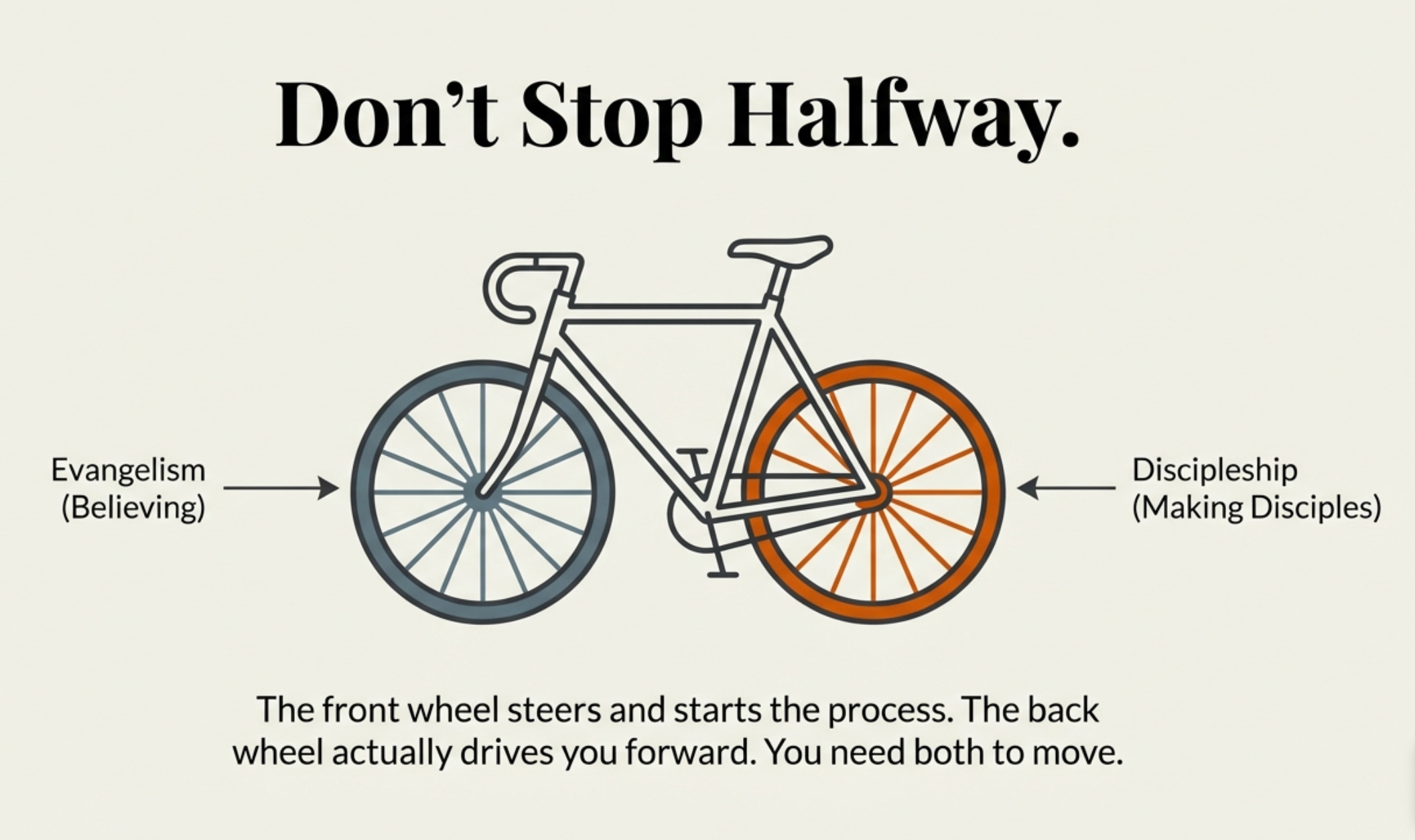
    Here’s something that might challenge you: accepting Jesus and becoming a disciple are not the same thing. The Great Commission has two parts, and most of the Christian world has focused heavily on one while neglecting the other. Evangelism—telling people about Jesus and inviting them to believe—is crucial and necessary. But Jesus didn’t stop there. He commanded His followers to make disciples, not just converts.

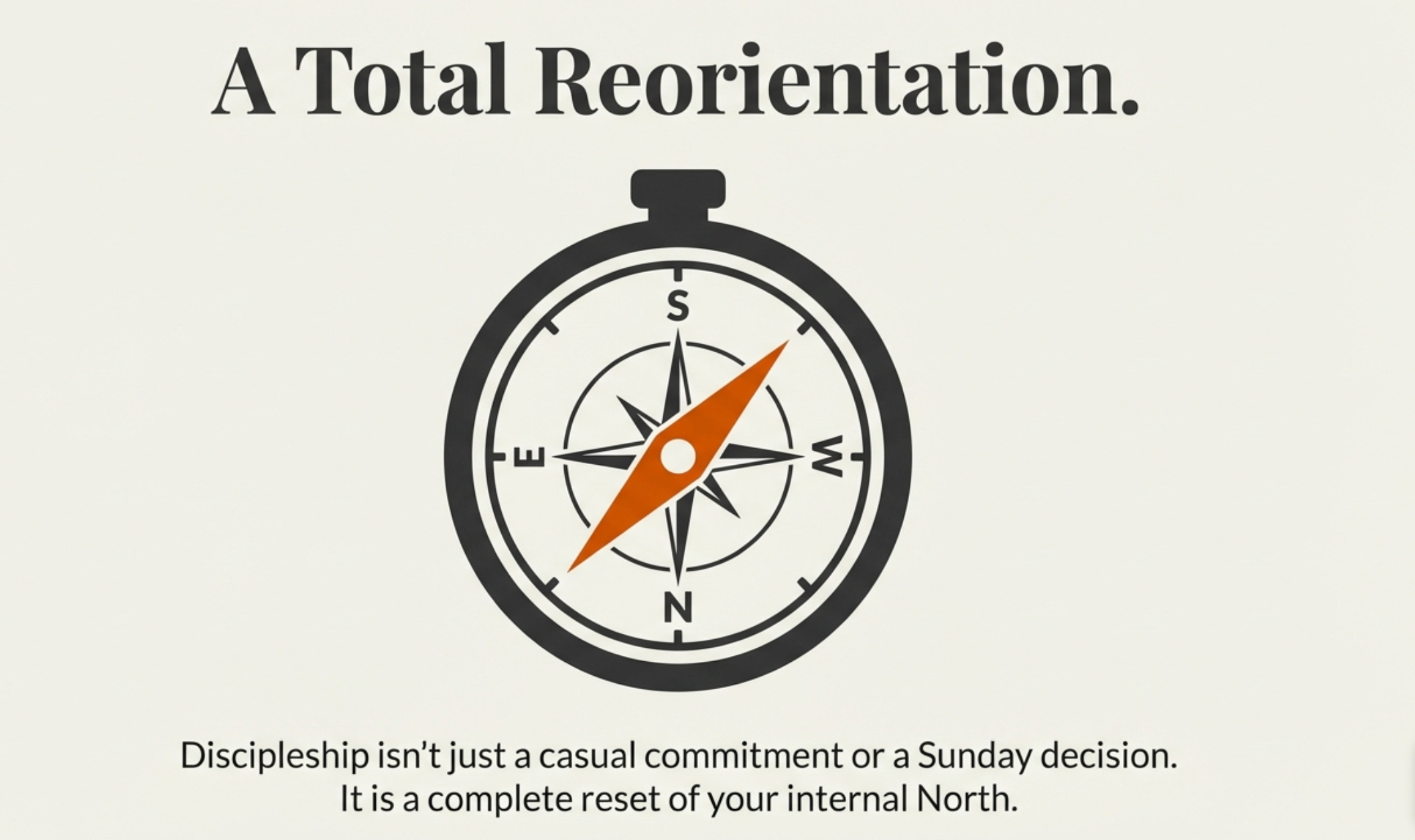
    Think about what a disciple actually is. When the early apostles heard Jesus use that word, they knew exactly what He meant because He had explained it clearly. A disciple is someone who has made a complete shift in their loves and loyalties. It’s not a casual commitment or a Sunday-morning decision. It’s a total reorientation of life around Christ.

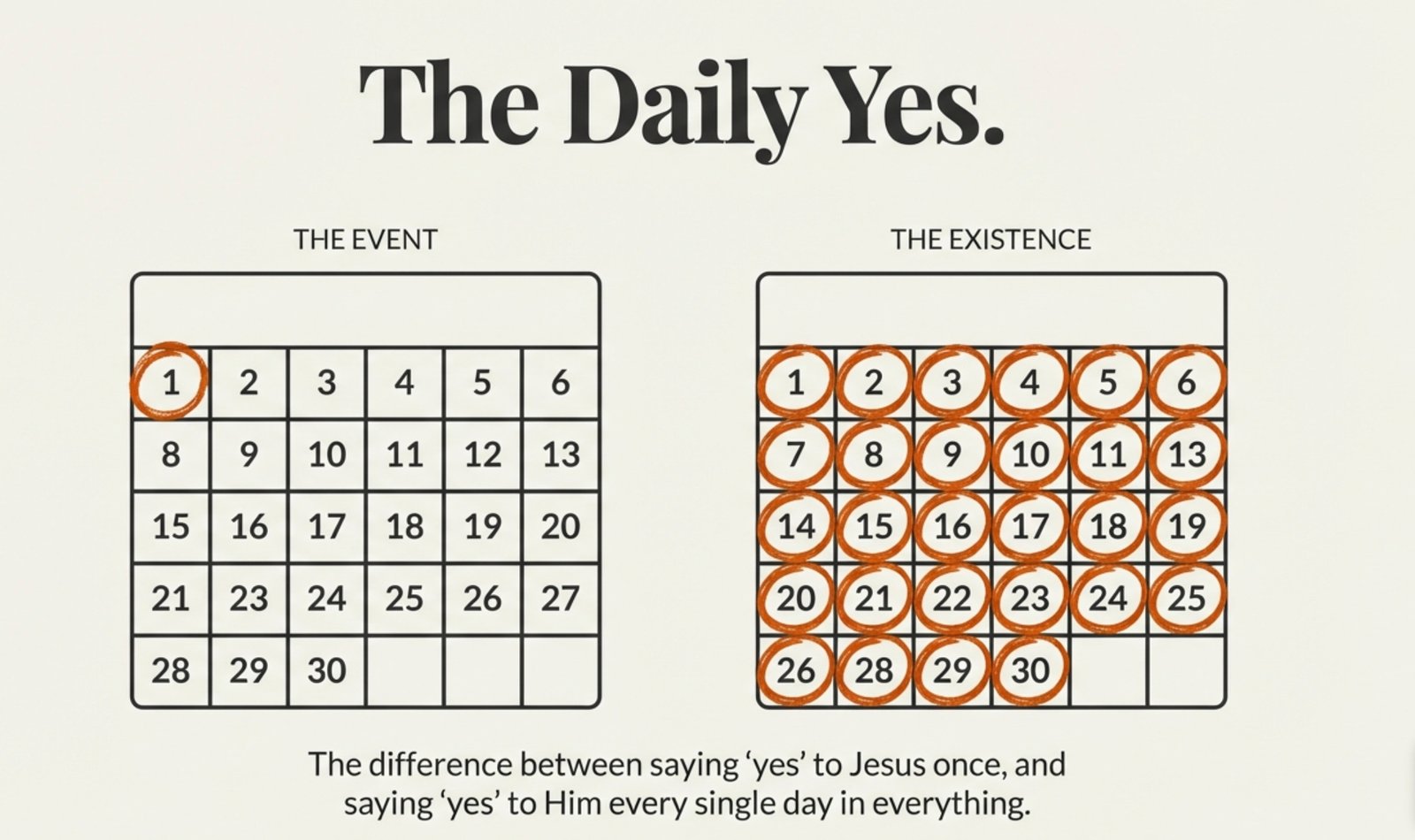
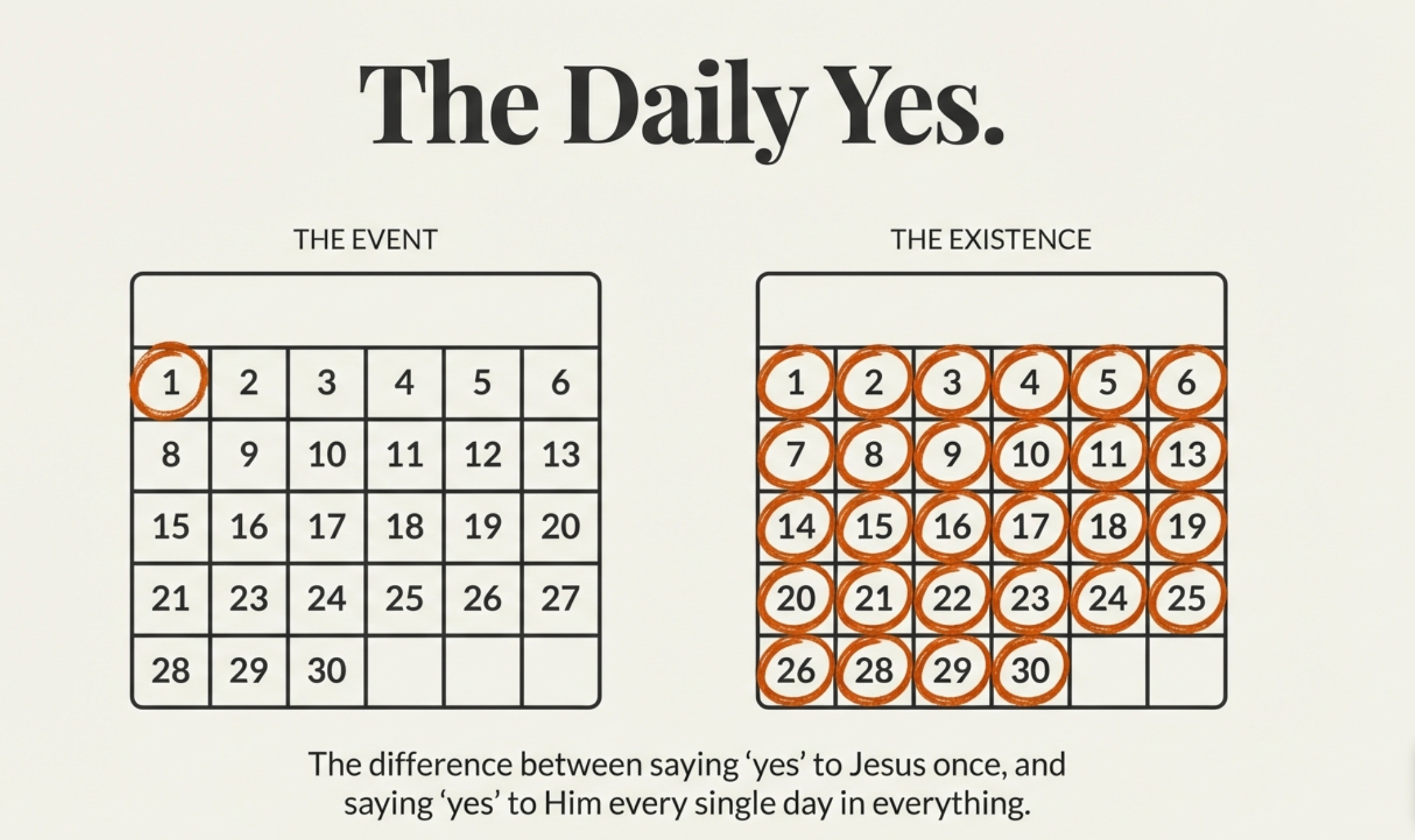
    Here’s the challenge: How many people who claim to follow Jesus have actually made that shift? They’ve prayed a prayer. They’ve accepted forgiveness. They sing about being saved. But have they truly become disciples? That requires something much deeper—a daily surrender that touches every area of life. It’s the difference between saying “yes” to Jesus once, and saying “yes” to Him every single day in everything.

    This is why the world is full of believers but lacks disciples. We’re good at evangelism. We’re not as good at discipleship. And discipleship—the daily, costly, complete following of Jesus—is what transforms people and ultimately transforms the world.

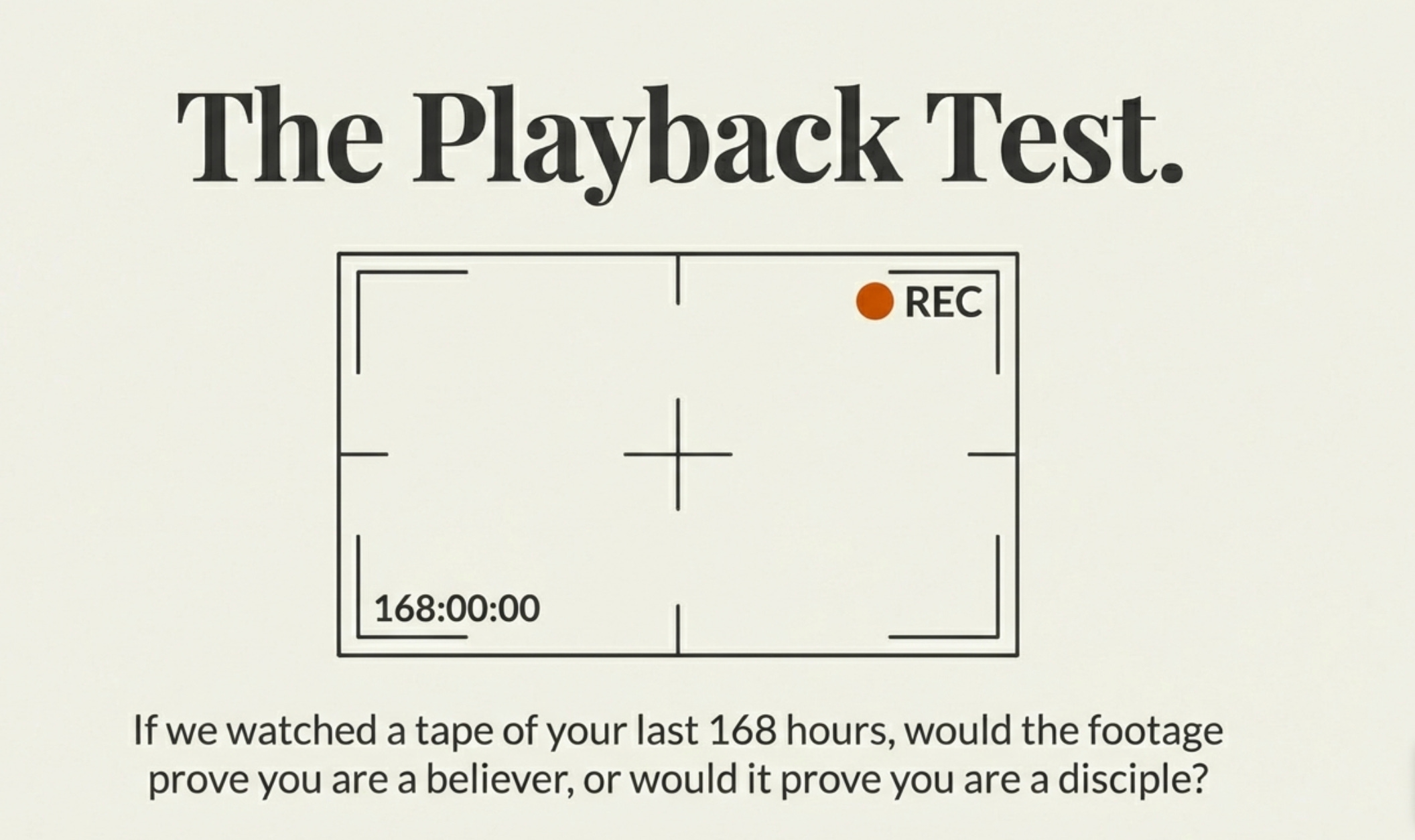
    Think about it: If someone watched your life for a week, would they conclude you’re a believer or a disciple?

    Prayer: Lord, help me move beyond belief into true discipleship. Show me the areas where I’m still holding back, still following my own way instead of Yours. I want to be someone who doesn’t just know about You—I want to follow You completely.

  • Get Behind Me, Satan: When Compassion Conflicts with the Cross

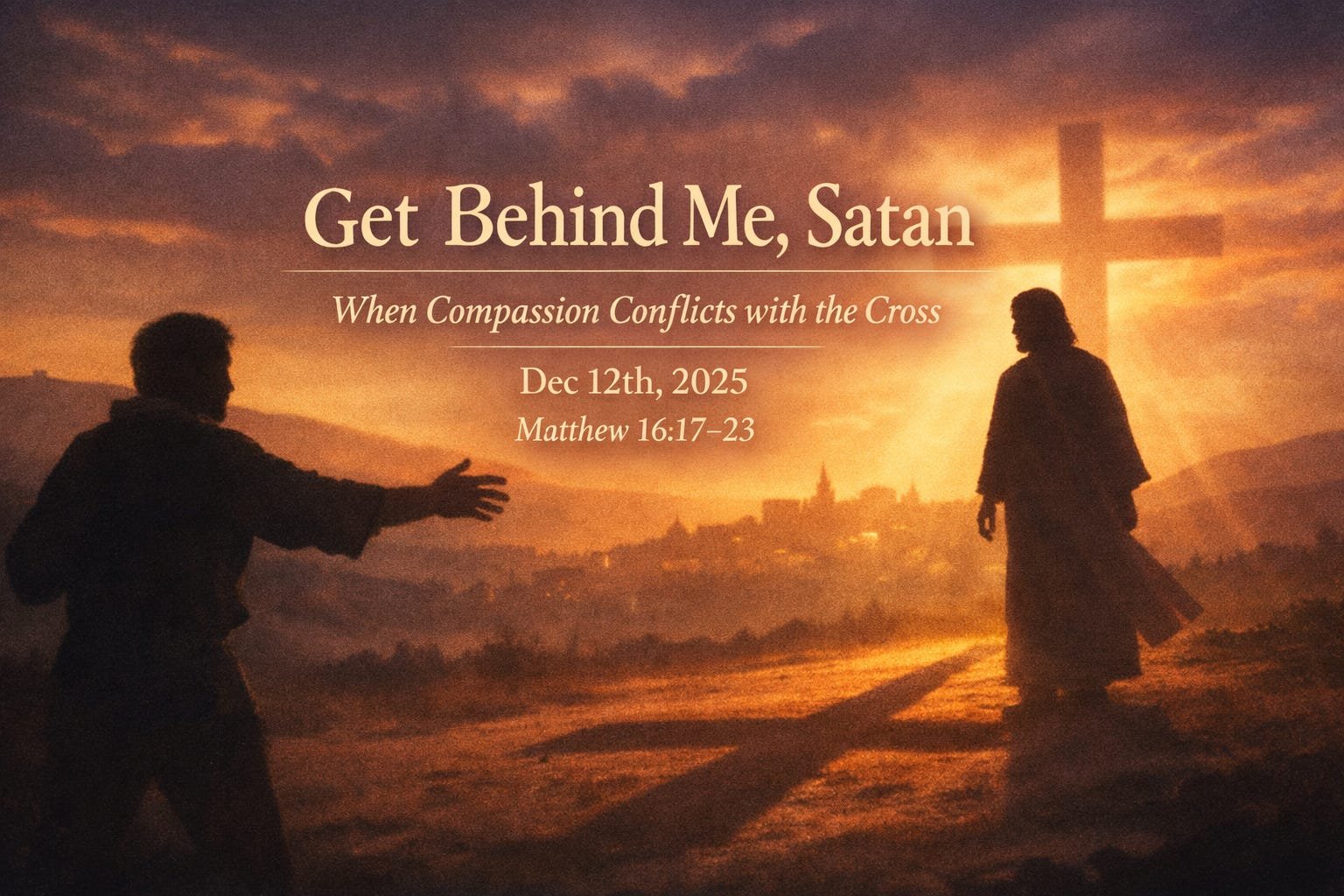
    Get Behind Me, Satan: When Compassion Conflicts with the Cross

    Scripture Foundation: Matthew 16:17-23

    Two minutes.

    That’s all it took for Peter to go from heaven’s favorite to Satan’s mouthpiece.


    The scene: Jesus asks His disciples, “Who do people say I am?”

    Peter nails it: “You are the Christ, the Son of the living God.”

    Jesus lights up: “Blessed are you, Simon! Flesh and blood didn’t reveal this to you—My Father in heaven did.”

    Heaven opened. Revelation poured down. Peter stood blessed above all men.

    Peak moment.

    Then it all crashes.


    Jesus starts explaining His mission: “I have to go to Jerusalem. Suffer. Be killed.”

    Peter’s heart breaks. He loves Jesus. He can’t stand the thought of Him suffering. So he does what any caring friend would do—he tries to protect Him.

    “God forbid it, Lord! This will never happen to You!”

    Sounds loving, right? Compassionate? Protective?

    Jesus spins around with words that must have felt like a knife:

    “Get behind Me, Satan! You are a stumbling block to Me. You’re not thinking about God’s interests—you’re thinking about man’s.”

    Not “You’re acting like Satan.”

    Not “Satan is influencing you.”

    Jesus called Peter Satan. To his face.


    What happened in those 120 seconds?

    Peter rejected the cross.

    He counseled Jesus to avoid suffering. To choose ease over sacrifice. To pick comfort over God’s purpose.

    And in that moment, he became hell’s spokesman.


    Here’s the terrifying truth:

    Human compassion can be demonic.

    When compassion steers you away from the cross—away from dying to self, away from suffering for God’s purposes—it becomes Satan’s weapon.

    The Devil doesn’t always show up with horns and a pitchfork. Sometimes he shows up as your concerned friend saying:

    • “Don’t be so extreme.”

    • “God wouldn’t ask you to sacrifice that much.”

    • “You need to think about yourself too.”

    • “Surely there’s an easier way.”

    It sounds reasonable. Caring. Wise.

    But if it’s pulling you away from the cross? It’s satanic.


    Jesus gave us the diagnostic:

    “You’re not setting your mind on God’s interests, but man’s.”

    That’s the line. That’s what separates true disciples from religious people who just want a better life.

    Think about it:

    • An atheist sets his mind on his own interests and his family’s comfort.

    • A “Christian” who does the same—who reads the Bible instead of scrolling Instagram but still centers life on personal gain—what’s the difference?

    Just religious coating over the same self-centered core.


    The way of the cross means daily death:

    “Not my will, but Yours.”

    Every morning: “God, what do You want today?”

    Not: “God, bless what I want today.”

    It’s the constant choice of God’s interests over your own. His purposes over your comfort. His glory over your reputation.

    This—and only this—separates real disciples from people using Jesus to upgrade their lives.


    Here’s what hits hard:

    Peter loved Jesus. His compassion was real. His concern was genuine.

    But love that keeps you from the cross isn’t love—it’s sabotage.

    Sometimes the most satanic voice isn’t the one tempting you to obvious sin. It’s the one saying, “Take care of yourself. You’ve sacrificed enough. God understands.”


    Reflection Question:

    Where are you counseling yourself away from the cross right now? Where does “self-care” become an excuse to avoid what God’s asking? What “compassionate” voice is actually keeping you from dying to self?

    Prayer:

    Lord Jesus, I don’t want to be Satan’s mouthpiece—not even accidentally. Show me every area where I’m choosing my interests over Yours. Give me the guts to embrace the cross daily, to die to self-seeking, to pick Your purposes even when they hurt. Shut down every voice—even the “caring” ones—that pulls me from Your path. Make my life a stumbling block to Satan, not to You. In Jesus’ name, Amen.