
Blog

  • The Daily Forgiveness You Actually Need

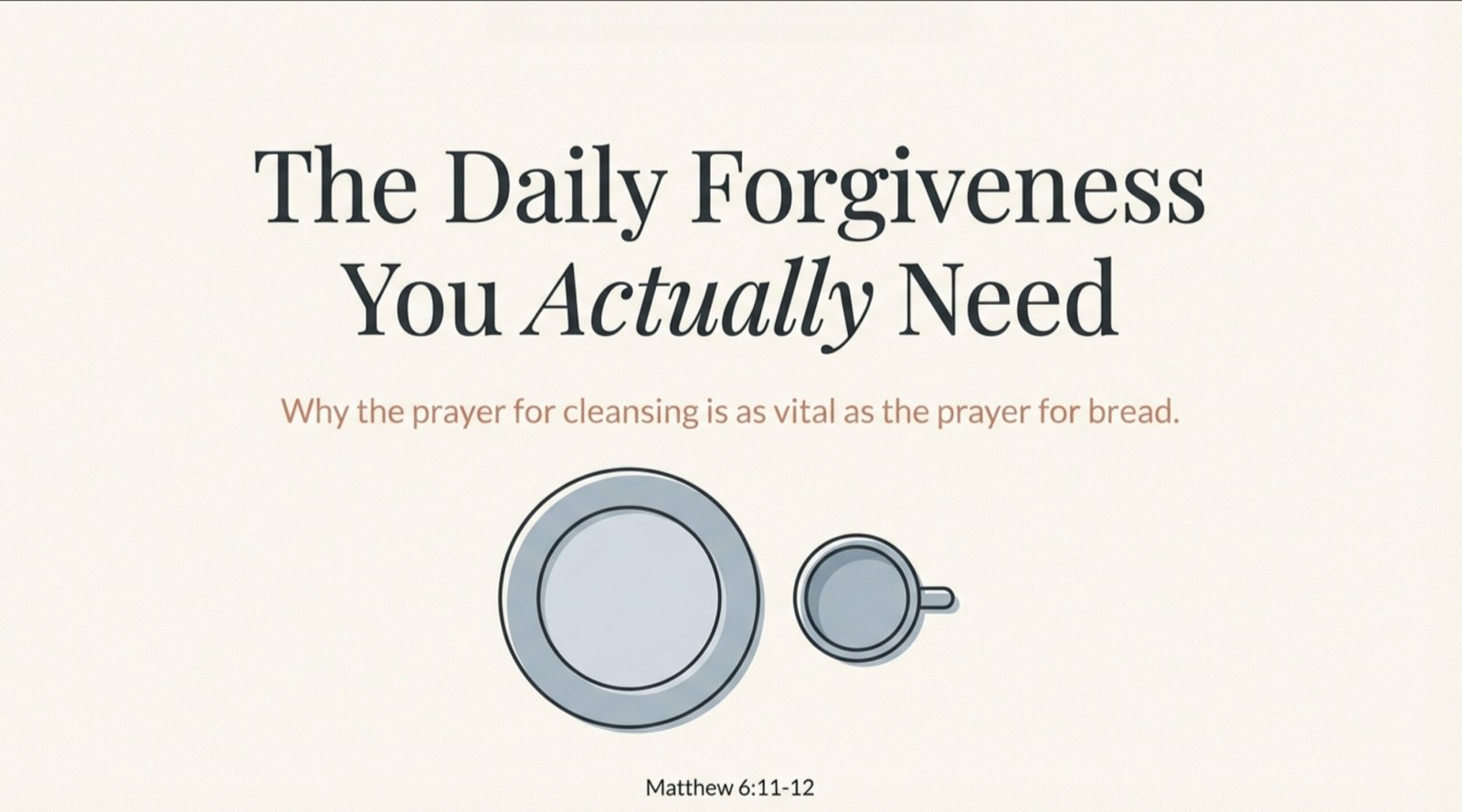
    The Daily Forgiveness You Actually Need

    Scripture: Matthew 6:11-12, 1 Corinthians 4:4, Proverbs 4:18

    There’s a prayer Jesus taught you to pray every single day, and most people either skip it or don’t understand why they need it. It’s the request for forgiveness. Not just once when you convert—daily. Every day.

    Notice the context. Right before asking for forgiveness, you pray “Give us this day our daily bread.” Jesus is connecting two things: you need food daily, and you need forgiveness daily. Not because you’re a failure. But because you’re human. There are areas of your life—whole areas—where you’re not even conscious of sin. You can’t see it. It’s like the part of an iceberg underwater. You only see the tip.

    Here’s what matters: there’s a difference between conscious sin and unconscious sin. You can live in total victory over the sins you’re aware of. You can know you’re not deliberately sinning, not living in rebellion. But that doesn’t mean you’re completely pure in every hidden corner of your heart. God sees things you don’t see about yourself. And that’s okay. That’s what sanctification is—progressive growth as God gives you light on areas you never even knew needed to change.

    So when you pray for daily forgiveness, you’re not confessing failure. You’re being honest. You’re saying “God, show me what I can’t see about myself, and forgive me even for the blind spots.” That’s the prayer of someone actually pursuing holiness, not pretending to have already arrived.

    Think about it: What’s one area of your life where you suspect there’s sin you can’t even see yet? Are you willing to ask God to show it to you?

    Prayer: Lord, forgive me not just for the sins I know about, but for the ones I’m blind to. Show me what I can’t see about myself, and help me grow in the areas I don’t even know need changing.

  • Following Isn’t Just Belief—It’s Becoming Like Jesus

    Following Isn’t Just Belief—It’s Becoming Like Jesus

    Scripture: Matthew 4:19, Hebrews 2:17, Hebrews 4:15

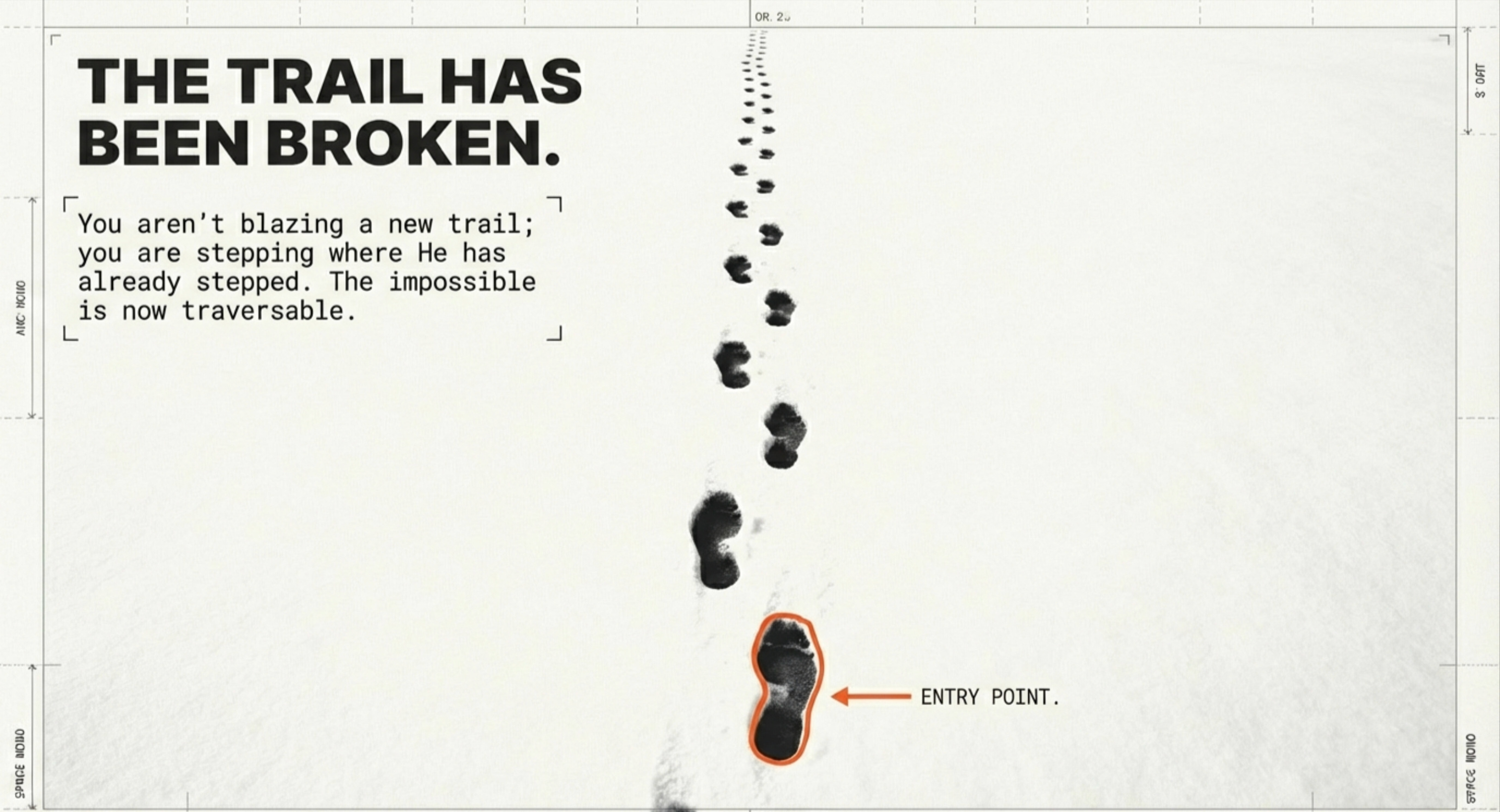
    When Jesus said “Follow me,” He wasn’t asking you to admire Him from a distance. He was inviting you to walk His actual path—to live like He lived. That’s a completely different thing than just believing in Him.

    Here’s what makes this possible: Jesus didn’t stay in heaven where He had all the power and resources of God. Instead, He became fully human. He got tired. He got hungry. He faced real temptation in real moments, just like you do. He didn’t float above the struggle—He entered it completely.

    Think about why this matters. If Jesus had come to earth and lived as a perfect angel, untouched by struggle, and then said “follow me,” it would be like asking a fish to follow a bird flying across the ocean. You’d be asked to do something impossible. But because Jesus became like you—fully human, fully tempted, fully tested—He can actually say “follow me” and mean it. He knows what you’re facing because He faced it.

    This changes everything about how you approach your faith. You can’t tell Jesus He doesn’t understand your temptations, your weakness, your daily battles. He’s been there. He lived it. And He overcame it. That’s why following Him isn’t just possible—it’s the only way to live.

    Think about it: What area of your life feels impossible to change? How does knowing Jesus faced real temptation in that area change your perspective?

    Prayer: Jesus, help me stop just believing in You and start actually following You. Show me what it means to walk in Your footsteps today, knowing You understand every struggle I face.

  • Your Direct Line to God

    Your Direct Line to God

    you don’t need to go through anyone else to find God’s will

    Scripture: Hebrews 8:11, 1 John 2:27, Romans 12:2

    In the Old Testament, if you wanted to know God’s will, you had limited options. You could visit the high priest with his Urim and Thummim—special objects used to discern God’s direction. Or you could find a prophet who could hear God speak. For ordinary people, there was no direct line. God felt distant. He was outside of them, speaking from the outside.

    But something changed at Pentecost. The Holy Spirit didn’t just come to believers—He came inside them. That changes everything. It means you don’t need to go through anyone else to find God’s will. You have direct access. The prophet isn’t your mediator anymore. The priest isn’t necessary. Not because those people are bad, but because the whole system changed.

    Here’s how it works now: God speaks to you from within through the renewing of your mind by the Holy Spirit. That’s Romans 12:2—be transformed by the renewing of your mind. As you think about Scripture, pray, and listen to the Holy Spirit’s whisper in your spirit, you discover God’s will. It’s personal. It’s intimate. It’s yours. Not something someone else has to unlock for you.

    The problem today? Many Christians still act like the Old Testament model. They believe they need their pastor to tell them what God wants. They think they need a spiritual leader to interpret Scripture for them.(Note: None of us, no matter how much we think we know, should arrogantly think we cannot learn from godly teachers of God’s truth.) But God promised in Hebrews 8:11 that all of His people—from the newest believer to the most mature saint—would know Him personally. You don’t need a middleman. You have a direct relationship with your Father.

    Think about it: Are you making decisions based on what God is telling you directly, or are you waiting for someone else to tell you what to do?

    Prayer: Father, I thank You that I can know Your will personally. Help me hear Your voice clearly through Your Spirit. Teach me to trust that You’re guiding me directly, not through others.

  • Repentance Is a Complete About-Face

    Repentance Is a Complete About-Face

    Repent, for the kingdom of heaven is at hand.

    Scripture: Matthew 4:17, Matthew 3:2, Acts 2:38

    The word “repent” doesn’t hit the same in English. But in its truest form, it means something radical — a complete turning around. Imagine a soldier in formation facing one direction. The command comes: “About turn.” He doesn’t shuffle sideways. He doesn’t half-turn. He rotates 180 degrees. His back is now to where his face was. He’s facing completely the opposite direction.

    That’s repentance. A turning of the mind. An about-face from one direction to another.

    John the Baptist understood this. The nation of Israel had been trained for centuries to look toward earthly things — land, prosperity, physical health, military strength. The entire Old Covenant was built on material blessings. But then John showed up saying: turn around. Stop looking at the earth. The kingdom of heaven is coming, and it’s about spiritual wealth, not material wealth. It’s about a heavenly inheritance, not an earthly one.

    Jesus picked up that same message. Matthew 4:17 shows Him preaching exactly what John preached: “Repent, for the kingdom of heaven is at hand.” Peter continued it after Pentecost in Acts 2:38. Same message. It wasn’t a casual suggestion. It was a fundamental reorientation. Stop running toward one thing and start running toward another. Stop building your life around earthly success and start building it around spiritual reality.

    Here’s the thing — real conversion isn’t just about getting forgiven. It’s about turning around. It’s about changing what you’re chasing, what you’re building toward, what you’re aiming your life at. And that turning has to be complete. You can’t half-repent any more than a soldier can half-turn. Either you’ve changed direction or you haven’t.

    Think about it: What direction are you actually facing? Toward earthly security or toward God’s kingdom? Are you in the middle of repenting, or have you made a complete about-face?

    Prayer: Lord, help me turn completely around. Not just from sin, but toward You. Help me stop running after earthly things and chase Your kingdom instead.

  • The Gospel That Goes Beyond Forgiveness

    The Gospel That Goes Beyond Forgiveness

    Scripture: Romans 14:17, Matthew 24:14, Mark 9:1

    Here’s something most churches get halfway right—they preach forgiveness of sins. And yes, that’s essential. That’s the starting point. But it’s not the finish line. Think of it like this: if your cup is dirty, you clean it. But then what? You fill it. A clean, empty cup is still useless.

    The kingdom of God isn’t just about having your past cleaned up. It’s about having your present filled up. Romans 14:17 is clear—the kingdom of God is righteousness, peace, and joy in the Holy Spirit. Not healing. Not prosperity. Not earthly blessings. Those might come, but they’re not the kingdom. The kingdom is an internal reality. It’s the life of heaven living inside your heart right now.

    So many Christians walk around with clean hearts but empty lives. They’ve been forgiven, but they haven’t been filled. They’re not hungry and thirsty for righteousness the way Jesus described in Matthew 5:6. And that’s why there’s so little joy, so little peace, so little actual power in the church. You’re offering people a cleaned-up life but no purpose to fill it with.

    The real gospel—the gospel of the kingdom—fills the cup. It brings righteousness (God’s character living through you), peace (freedom from anxiety and fear), and joy (the kind that defeats depression). This is what needs to be proclaimed. Not just forgiveness, but transformation. Not just cleansing, but fullness.

    Think about it: Are you living with a clean but empty cup, or are you letting God fill you with His righteousness, peace, and joy?

    Prayer: Jesus, help me not settle for forgiveness alone. Fill my heart with Your righteousness, Your peace, and Your joy. Let the kingdom of God be real and powerful in my life today.

  • Don’t Bow to the Wrong King

    Don’t Bow to the Wrong King

    Scripture: Matthew 4:8-10, Isaiah 14:12-14

    Satan made an offer to Jesus: “Fall down and worship me, and I’ll give you all the kingdoms of the world.” It’s the same offer he’s been making since the beginning. The offer to worship him instead of God. And you need to understand—this is how sin started in the first place.

    Before Satan was Satan, he was a mighty angel, the highest created being in heaven. Beautiful, full of wisdom, positioned higher than anyone else. And what made him fall? Pride. He decided he wanted worship for himself. He said, “I will make myself like God. I will get the other angels to admire me, not Him.” That desire for worship from others—that’s the root of all sin. Not murder. Not adultery. Those came later. The first sin was one being wanting to be worshipped instead of God.

    Here’s what you need to see: that same temptation is alive today. It doesn’t come to most of us as “bow down to me,” but it comes as wanting people to admire you. To respect you. To think you’re great. You might be a pastor, a leader, a parent, or just someone trying to look good on social media. But if your heart wants people to look at *you* instead of looking at *Jesus*, you’re walking the same path Satan walked. It might not feel dangerous, but it leads to the same place.

    Jesus’ answer was simple: “You shall worship the Lord your God and serve Him only.” Not people. Not leaders. Not anyone. God alone. Direct. Personal. Nobody in between.

    Think about it: Where in your life are you seeking admiration or approval from people instead of from God?

    Prayer: Lord, free me from the need for people to think I’m great. Teach me to want only Your approval. Help me point others to You, not to myself.

  • The Worship That Matters

    The Worship That Matters

    Scripture: John 4:23-24, Matthew 4:10

    Here’s something that might shift how you think about Sunday mornings. When churches call their service a “worship service,” they’re actually using the wrong word. What happens in most church gatherings—the singing, the music, the praise—that’s not worship. That’s praise and thanksgiving. And those are good things. But they’re not the same thing.

    Real worship goes deeper. Jesus told the Samaritan woman that true worshippers will worship the Father “in spirit and in truth.” He wasn’t talking about physical actions—raising hands, clapping, singing. All of that is fine. But worship happens when you go beyond body and soul and enter into that deepest part of yourself where it’s just you and God alone.

    Think of it like the Old Testament tabernacle. The outer court? That’s where excitement happened—animals being sacrificed, priests moving around. The inner court had activity too—incense burning, lamps being lit. But the Most Holy Place? That was different. That’s where God dwelt, and only one person could enter—and they entered alone. No distractions. No other people. Just that person and God. That’s where worship happens. That’s the realm of the spirit.

    In the New Covenant, because the Holy Spirit now lives inside you, you can access that place. You can enter that inner chamber of your spirit anytime, anywhere—not just on Sunday mornings. That’s where true worship takes root. It’s intimate. It’s real. And nobody can teach it to you. Only the Holy Spirit can lead you there.

    Think about it: When was the last time you worshipped God in that quiet, spirit-to-spirit place—not with your hands or emotions, but in the deepest part of yourself?

    Prayer: Holy Spirit, teach me to worship God beyond songs and emotions. Lead me into that deep place where it’s just me and my Father, where my whole being bows before Him in truth.

  • Authority Comes From Practice, Not Position

    Authority Comes From Practice, Not Position

    Scripture: Acts 10:1-6, Matthew 28:18-20

    Here’s a reality that will reshape how you think about spiritual authority: An angel couldn’t preach the gospel to Cornelius. Not because the angel didn’t know it. Not because the angel lacked intelligence or ability to communicate. But because the angel had never experienced salvation. The angel had never been a sinner who needed Jesus. So God wouldn’t allow the angel to preach what he hadn’t experienced.

    Instead, God sent for Peter—a man who had denied Jesus, been restored, and lived out the gospel himself. Peter could say something the angel never could: “I was lost. Jesus found me. His blood forgave me. And now I’m free.” That personal testimony, that lived experience, gave Peter authority the angel didn’t have. It wasn’t about credentials or knowledge. It was about authenticity.

    This changes everything about Christian leadership. You have no right to teach what you haven’t done. If you’ve never overcome sexual temptation, you can’t stand up and preach purity to others. If you’ve never given sacrificially, you can’t challenge others to generosity. If you’ve never fought through anger or jealousy or fear, you can’t claim authority in those areas. Authority doesn’t come from your degree or your title or how eloquent you are. It comes from what you’ve actually experienced and what Jesus has actually done in your life.

    The invitation here is humbling: Know your lane. Recognize where God has worked in your life and speak from that place of authenticity. And in the areas where you’re still struggling, be honest about it. “Hey, I’m fighting this too. Let’s struggle together.” That’s more powerful than pretending to have all the answers.

    Think about it: Where am I claiming authority I haven’t actually earned through lived experience?

    Prayer: Jesus, humble me enough to admit what I haven’t experienced. Give me the courage to speak only from what You’ve done in my life, and the honesty to ask for help where I’m still learning.

  • The Hunger That Proves Your Birth

    The Hunger That Proves Your Birth

    Scripture: 1 Peter 2:2, Matthew 4:4

    A healthy newborn baby doesn’t have to be taught to cry for milk. It just does. You don’t need parenting classes to convince a hungry infant to eat. the hunger is there, built in, natural. That’s how you know the baby is healthy. If a newborn shows no desire for milk, something is wrong.

    Jesus taught that the same principle applies to spiritual life. When you’re genuinely born again, you’ll have a natural hunger for God’s Word. Not because someone forced you. Not because you’re trying to impress anyone. But because something inside you, your new spiritual nature is hungry. You want to know what God has to say. You want to hear His voice.

    Here’s the hard truth: If you claim to be a Christian and you feel zero desire to read Scripture, zero longing to hear what God is saying, you might need to question whether you’ve actually been born again. Not in a condemning way—but in an honest way. A healthy spiritual baby cries out for God’s Word the way a physical baby cries out for milk. There’s no pretense. There’s no discipline required at first. It’s just hunger.

    The good news? That hunger can be developed. That appetite can grow. But it starts with recognizing that genuine faith produces a natural longing to know God through His Word. If that longing isn’t there, something needs to change—either your understanding of what being born again means, or your actual relationship with Jesus.

    Think about it: Do I have a natural hunger for God’s Word, or am I just going through the motions because I think I should?

    Prayer: God, if my spiritual hunger has grown cold, wake it up. Give me that childlike desperation to hear You speak. Make me hungry for Your Word the way I’m hungry for life itself.

  • When God’s Word Gets Twisted

    When God’s Word Gets Twisted

    Scripture: Matthew 4:6-7, 2 Corinthians 12:9

    Satan knows Scripture. In fact, he can quote it better than you can. But here’s what he does—he twists it. He takes one verse out of context and makes it mean something Jesus never intended. And if you’re not careful, you’ll use God’s Word the exact same way.

    Look at this pattern. When Jesus told the devil “Man shall not live by bread alone, but by every word that proceeds from the mouth of God,” the devil said, “Great! I agree with Scripture.” Then he quoted Psalm 91—a real promise from God—and tried to convince Jesus to jump off the temple. One verse. Out of context. The promise was real, but the application was twisted.

    Here’s where this gets personal for you. It’s incredibly easy to find a scripture that justifies what you already want to do. Want to date someone you know isn’t right for you? There’s probably a verse you can twist. Want to make a selfish business decision? Scripture has material you can grab. The danger isn’t that you’re ignoring God’s Word—it’s that you’re using God’s Word to cover up your own desires.

    Jesus’s response teaches you how to combat this. When the devil quoted one scripture, Jesus said, “It is also written.” He didn’t stop at one verse. He understood that truth comes from the whole counsel of Scripture, not isolated promises yanked out of their context. That’s your safeguard. Study Scripture as a whole. Get to know the big picture. And when you’re tempted to use God’s Word to justify something, ask yourself: Does this align with the entire message of Jesus? Or am I just finding one verse to get what I want?

    Think about it: What area of my life am I potentially using Scripture to justify instead of using Scripture to guide?

    Prayer: God, open my eyes to the times I’m twisting Your Word to fit my plans. Give me the discipline to study Scripture in context and the courage to follow what it actually says, not what I want it to say.